About Us
In late 2024, the Phippsburg Marine Working Group defined a need for an extra set of hands. Phippsburg’s waterfronts were changing and there were many projects to be tackled and questions to be not only answered but found. The working group, led by the indefatigable Merry Chapin, Robin Wallace, Terry Watson and Adam Kernan-Schloss, raised community interest and funds to hire a Fellow from Island Institute. For two years, that Fellow will be living and working with the people of Phippsburg, guided by the Marine Working Group.
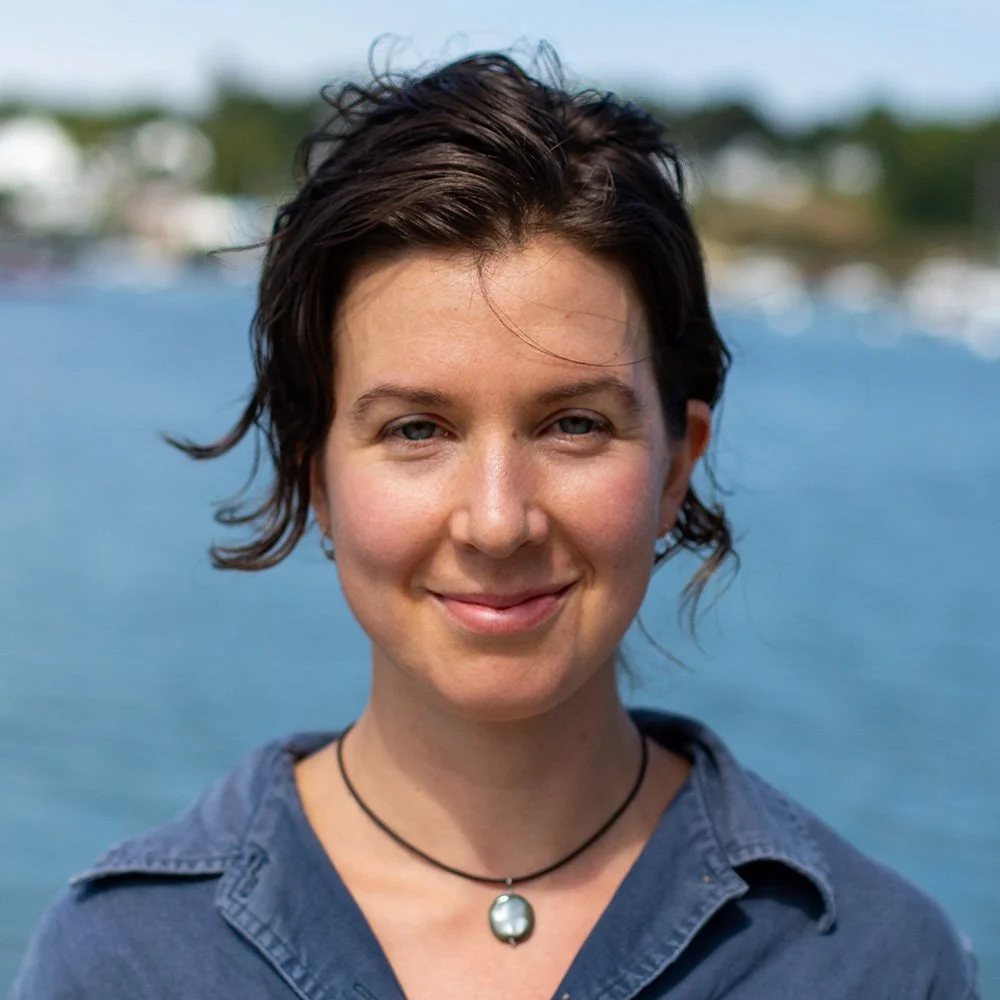
Island Institute Fellow Katherine (Kate) Cart was raised up the Kennebec River, in Hallowell. She’s spent most of the last decade working in, writing about or advocating for fisheries. She got her start on the water as an undergraduate at the Darling Marine Center. Eventually, she moved out to Alaska to work first in salmon hatcheries and then at sea, on commercial fishing vessels. Out there, she sensed a consistent disconnect between regulators, consumers and the people who actually harvest marine products. So, she started writing about it. Finally, she found her way back to Maine and got a job sterning on a lobster boat out of Bailey Island, before starting graduate school, where she wrote about fish, money and the people caught in between. She comes to Phippsburg after a year in Canada, studying the North Atlantic Cod Fishery. Here on the peninsula, she will continue to tell fisheries stories, advocate for cultural equity in changing coastal spaces, and lend a hand wherever she’s able.
This website, the Phippsburg Marine Resource Hub, will grow as our projects do, and will house updates, foci and resources as they become available.
Fellowship Foci
Marine Education:
With generous support from the Casco Bay Estuary Partnership, we are organizing educational marine field trips for middle and high school students. The benefits of these trips are multifold: deepening youth engagement with the working waterfront community and ecosystems; empowering youth to take learning into their own hands (literally!); connecting educators; and perhaps stimulating some to consider marine careers. We believe that to maintain a culturally equitable community, we must foster the idea that no method of education is superior to another and that diversity of knowledge is necessary for the long term resilience of our community.
Solidifying Historical Shore Access:
Phippsburg clammers have long relied on hand-shake agreements with land owners to cross properties and access the mudflats. But as the demographics of Phippsburg change, so do the ways that we understand our land use, and clammers are losing access to historical fisheries trails–which means that they are losing access to crucial working waterfront. A central focus of my Fellowship is to better understand this pattern and support collaboration between local land trusts, landowners, municipal officials and clammers. I’ve been working closely with clammers and research groups to identify the biggest opportunities for more formal agreements.
Tech Help:
Fishermen are now required by the state to report their landings digitally, one of many changes facing them. To help them navigate these often-foreign technologies, I have begun offering drop-in tech help hours at the Totman Public Library.
Community Outreach:
Improving communications is central to every facet of this Fellowship. To that end, we are starting a rather holistic community outreach plan to invite all community members to engage in and think more deeply about what it means to live in a working waterfront community.While this plan is multifaceted and ever-growing, the element that I’ll highlight here is our new fisheries dispatch.
Working Waterfront Inventory:
In partnership with the Maine Coast Fisherman’s Association and as one of an eight-community cohort, we are completing a working waterfront inventory. Much like a population census, this data set will provide a baseline against which future inventories can be measured. In changing times, it is easy to forget what we once took to be the mundane and unchangeable facets of community and place. This eight-community cohort hopes to begin a long-standing tradition in coastal communities of regular working waterfront inventories, so that we might better understand trends and remediate them when possible or necessary.
Thank you.
This fellowship is made possible with support from Island Institute and our generous donors.