Photo Essay: The Warm Season Starts at Base Camp
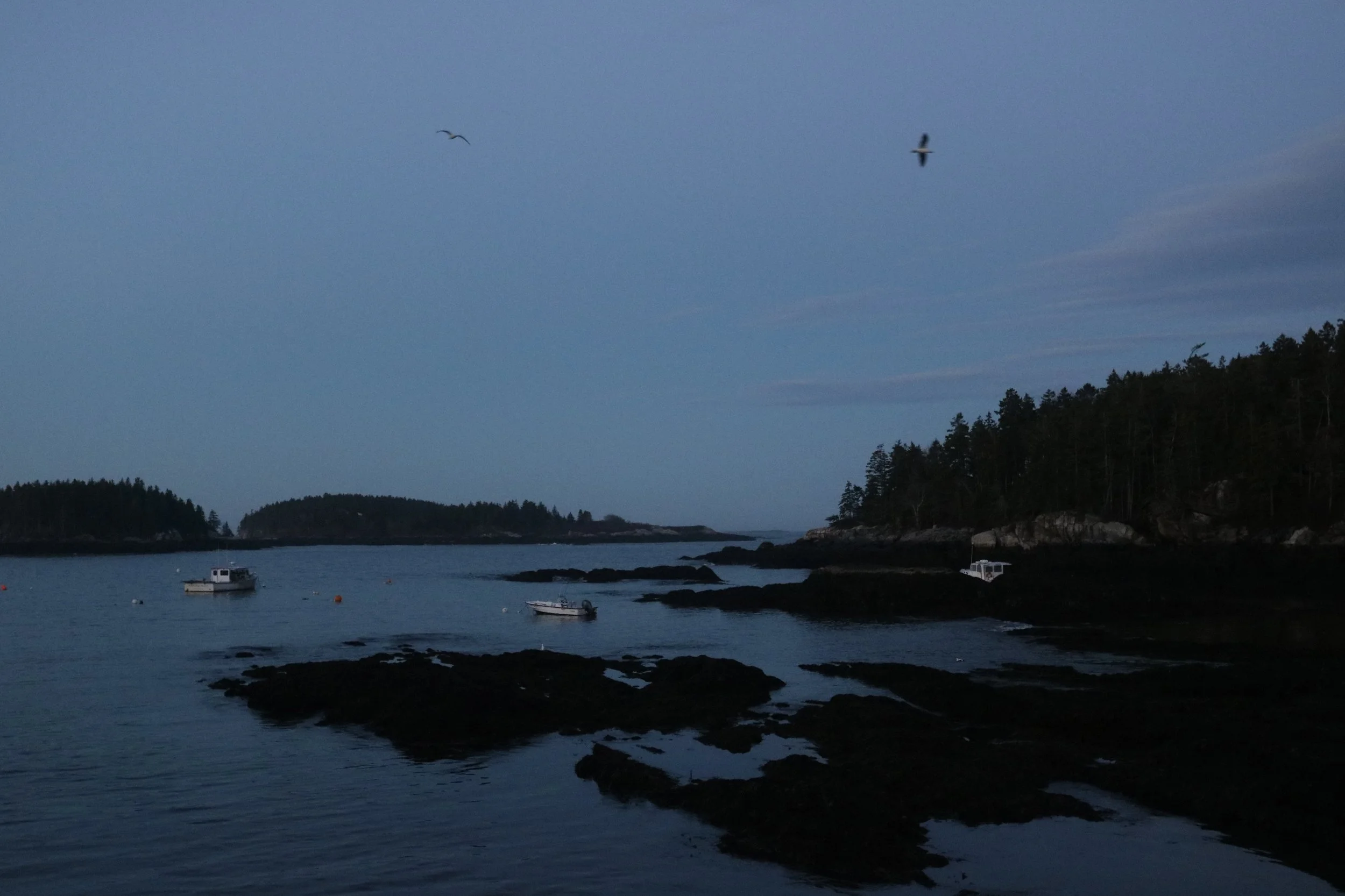
Early morning in West Point.
ON A COOL, gray Monday morning, I drove over to the Maine Oyster Company’s Base Camp. Just ahead of me, a minivan with a cargo topper was driving with the characteristic hesitancy of a warm-season tourist. They parked at Base Camp, beside John Herrigel’s tear drop trailer. I figured they were some early season, sight seeing strangers. I parked and made my sleepy way towards Base Camp’s half-cracked door.
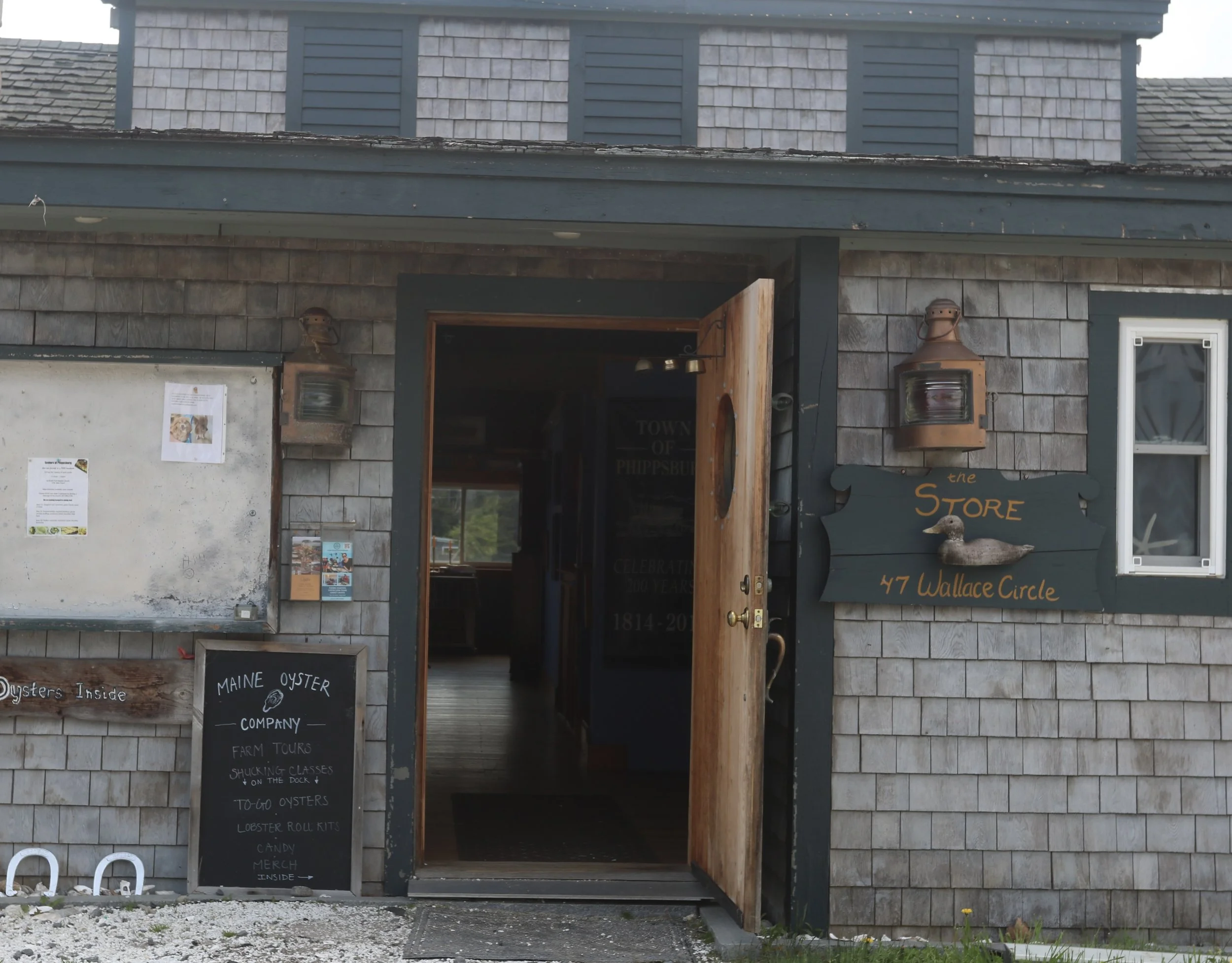
That familiar, welcome doorway.
This West Point hub has long been a community resource: a working dock, a general store, a passageway from land to water. At that old store back in the day, according to one Phippsburg lifer, you could once buy the Wall Street Journal, rubber boots and an ice cream cone. Now, the Herrigel family manages 47 Wallace circle with a impressive commitment to an open-dock-and-door community-first ethos.
Again and again, I hear them say: We want this to be a community hub, a gathering place, a third-space and a healthy part of the working waterfront. With that in mind, they seem to keep the door to Base Camp half-cracked at all times. The dock is a quiet thoroughfare of fishermen, scientists, oyster farmers and students. On the rooftop deck, Virginia Shaffer runs Lady Oyster, a petite, totally successful oyster and wine tasting business. Joe Jerome’s North East Salt Water launches oyster farm and fishing tours at the lower commercial dock. Herrigel siblings John and Bryn (Jerome) manage Maine Oyster Company out of the lower level. And upstairs, in the old general store, you can find a big, pleasant meeting space, decked out in old West Point paraphernalia, cozy with low-down couches, espresso machine, record player and wild Atlantic views.
WAY BACK IN September, when I first arrived in Phippsburg – and had no clue what I’d gotten myself into with this fellowship – I stopped over at Base Camp. I’d been tasked with organizing a series of marine education field trips for middle and high schoolers. I was a little daunted and had no clue where to start. Who on earth would be willing to take forty pre-teens out on the open water?
That day, Joe Jerome and John Herrigel met me at Base Camp. As it turns out, they were way more than willing to host the field trips. They’d basically planned the whole day already. It was a funny meeting. I didn’t know these guys. Their enthusiasm threw me. In fact, to be totally honest, I was a tad skeptical of it. Who were these overzealous kooks?
And at the end of the meeting, with a rather intense gravity, Joe asked bluntly: “So what are you goals here? What do you want to get done in your fellowship?”
Thrown, I rambled a bit, described a desire to rewrite what “education” means. I wanted to help expand education’s limited definition to include the embodied, highly technical and totally organic education that a person can get while working on the water.
It was true, I did and do want to expand this definition. But I had no idea if that answer flew. Joe just sort of frowned, nodded and changed the subject.
But a few weeks after that meeting, Joe called me up. We talked about our backgrounds, how we first found marine work, and where the mutual interest in getting kids out on the water comes from. Joe described the possibilities that open for young people, if given a chance in the marine space. So often, for students who don’t feel like they fit perfectly in the intensely rigid confines of mainstream academics, the hands-on education of marine work can be a life-changing path. “If I can just save one kid [from making dumb choices on land],” Joe said to me that day, of hosting tours for young people, “then it’s worth it.”
Last fall, Joe, Bryn and John hosted a phenomenal series of oyster farm tours, shucking classes, and distribution lessons for multiple groups of young students. It was amazing to be part of that energy and passion. And over the winter, Joe absolutely ran with the aquaculture education idea, mapping out a full-scale plan to get more kids interested in and connected to marine work and science and their overlaps.
It’s been nine months since that first meeting. I can confirm: The Herrigels and Jeromes are radically dedicated to keeping 47 Wallace Circle a dynamic community space. This winter, Rodger Herrigel cleared a desk off for me, so that I might not be such a hermit working from home everyday. Jillian Herrigel’s striking abstracts celebrate all aspects of Phippsburg’s fisheries. (She even showed me a painting of a dredging vessel at work a few months ago. Not exactly your typical Maine coast fisheries painting – and I loved it all the more for that.)
AND NOW, SOMEHOW, it’s spring!
I was at Base Camp again, on that gray Monday last week, because John had invited me to join a brief excursion. Scientists from the Darling Marine Center had asked to deploy a water quality sonde on one of MOC’s mooring buoys.
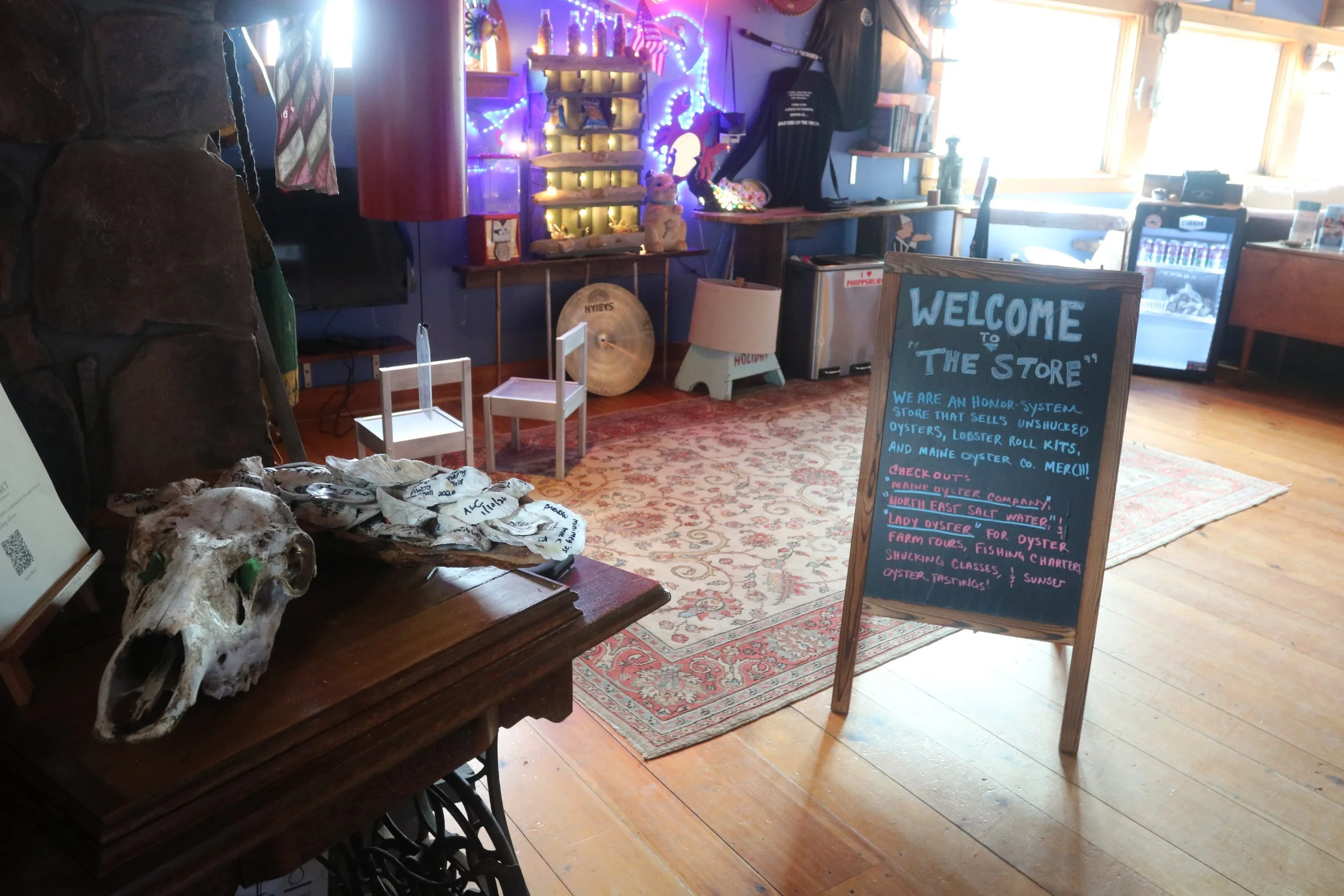
I walked into the old and now familiar general store, past the big quadruped skull and bowl of oyster shells. Silent, early, nobody about. Through the big windows, the clouds over the Atlantic were bunching and breaking, silvery light touching down. But no sign of John or Moo, John’s loving bull-dozer of dog.
WHEN I WANDERED back out, those mini-van folks were unloading gear. It all appeared suspiciously science-y. I knew their type: the classic, beat-up little cooler in which water samples neatly fit, that vaguely beleaguered but cooly windblown look of the marine academic, and, most strikingly, a coppery R2D2-looking thing – the sonde.
Yes indeed, here were two marine scientists. And of course, because coastal Maine is one tiny, 3,500-mile town, we shared a few friends, advisors and places in common.
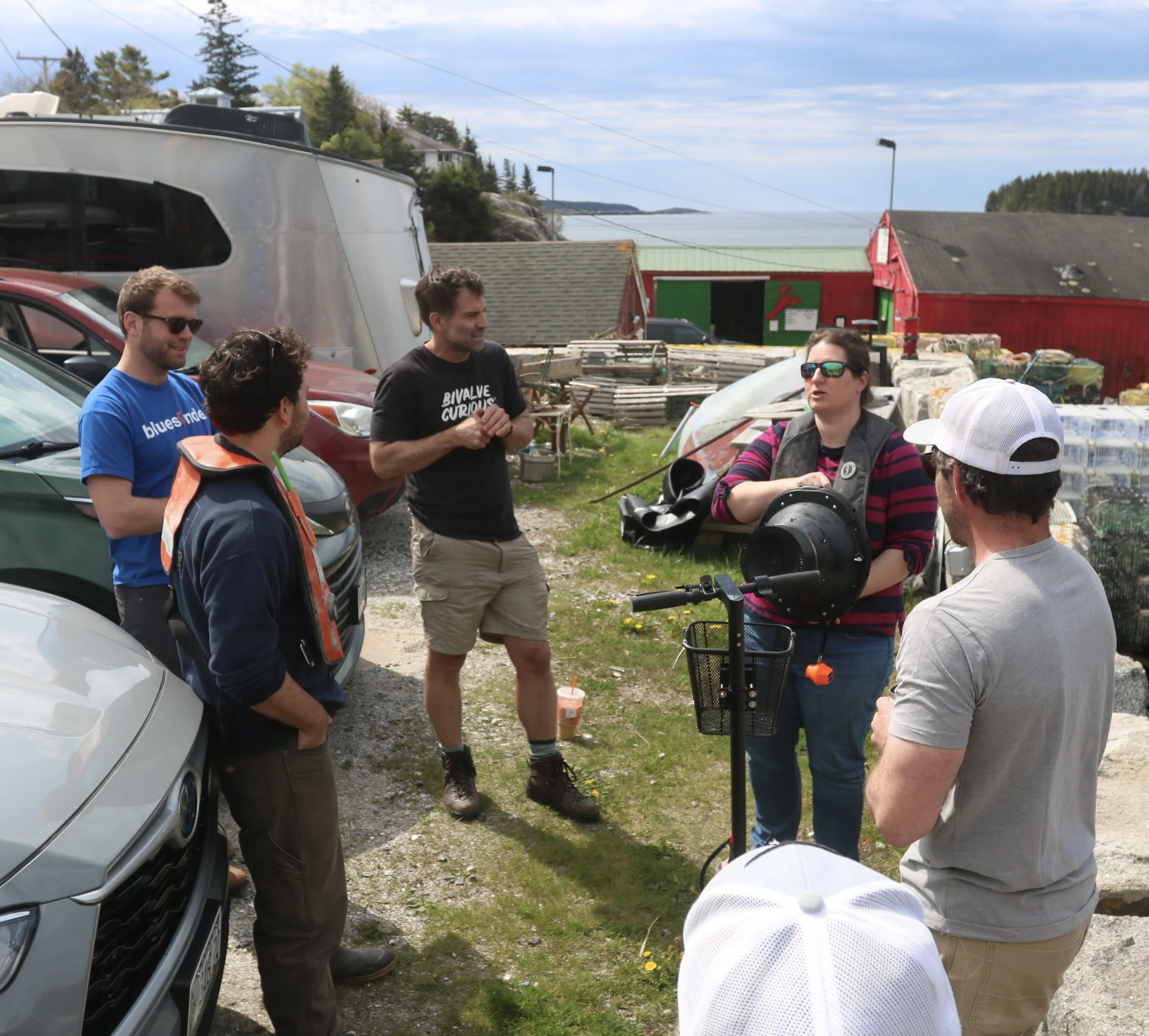
The team listens to Kate (holding the sonde) explain the monitoring project. Featuring John’s scooter.
This was Kate Liberti, Field Operations Director, and Tom Kiffney, Post Doc, both of the Darling Marine Center’s Brady Lab. Soon, we were joined by John Williams of Bluesonde.
Bluesonde is a new venture out of Portland. They design systems and machines to help scientists, farmers and other marine stakeholders understand the patterns and changes of the big, wide ocean.
The ocean is no homogenous lump of water. Instead, consider it more like a slithering pile of dynamic braids, a heap of ever-changing currents and strata. New systems are always feeding in. For example, as carbon dioxide dissolves in the ocean, the water becomes more acidic. This has a cascading impact on sea life, including shellfish, whose shells thin in high acidities. Another example: As super cold fresh water flows from thawing ice caps, big current systems like the Atlantic Meridional Overturning Circulation reconfigure. You can’t really see this from the surface. But you can feel it. Oceanic currents like these have an immense influence on terrestrial climate, growing seasons, migrations, wind patterns – in short, basically everything.
The sonde that Kate and Tom had arrived with was one of several deployed at other farms up the coast. It will help measure many physical qualities of the water arriving on our shores, proxies for larger changes. But numerical graphs aren’t everything. Current evidence-gathering and future solution-making requires all hands, all stories and all perspectives.
That’s why getting kids interested in all types of marine careers is useful for the future. If an oyster farmer, a lobsterman and a scientist sit down to share evidence of change and brainstorm for possible solutions, they’re going to bring diverse experiences and ways of translating those experiences to the table. The outcomes will be more creative, sustainable, and equitable than if folks remain siloed.
Here’s a short photo essay from that day, including our morning’s deployment excursion; yet another awesome educational field trip led by the amazing Bryn and Joe Jerome and Kelly Morgan; and some early-stages event planning with John Herrigel, Erik the Shellfish Warden and Peter the Harbor Master. Though there was a stiff wind off the water by noon, the warm-season energy was certainly in the air.
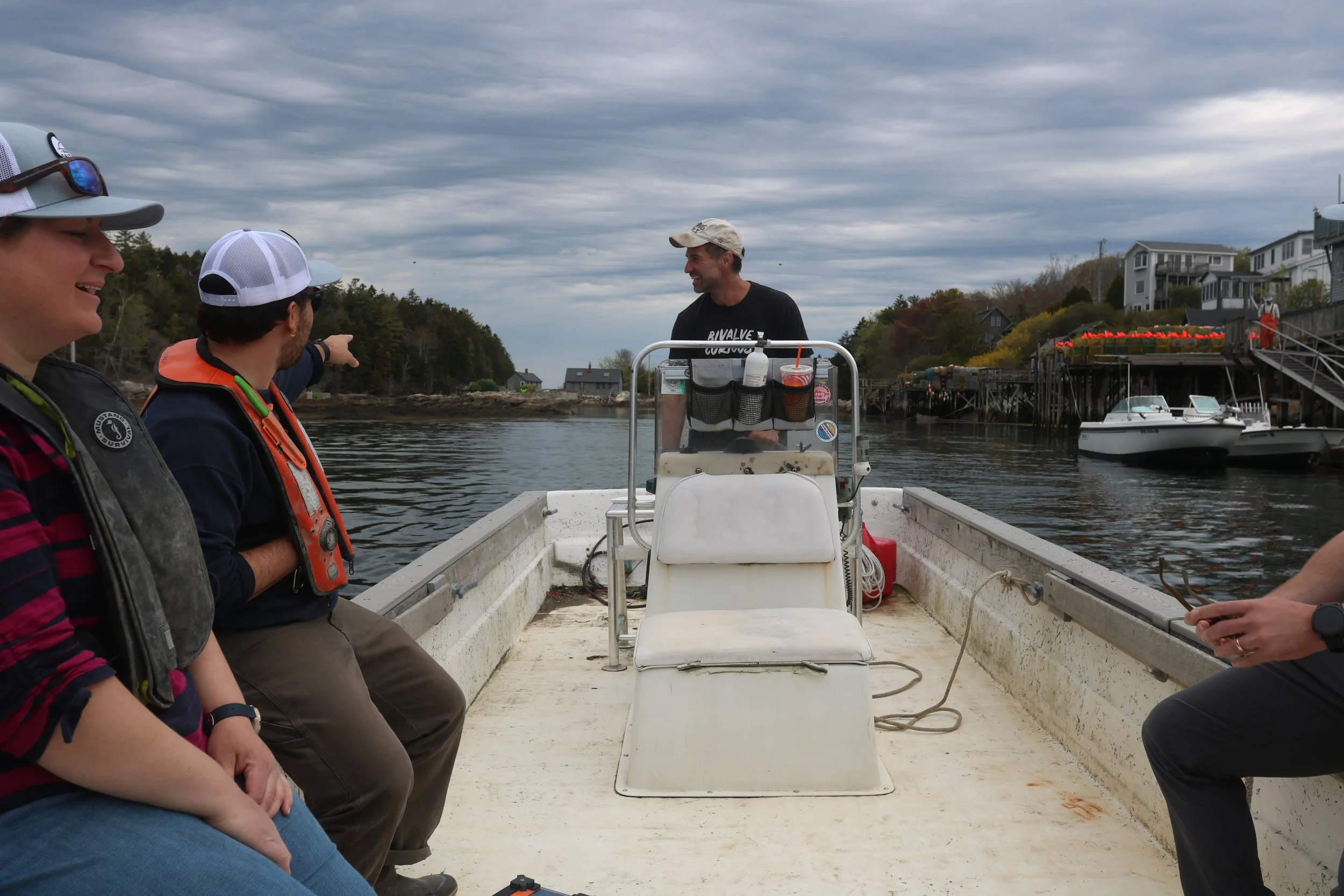
Heading out to the deployment site.
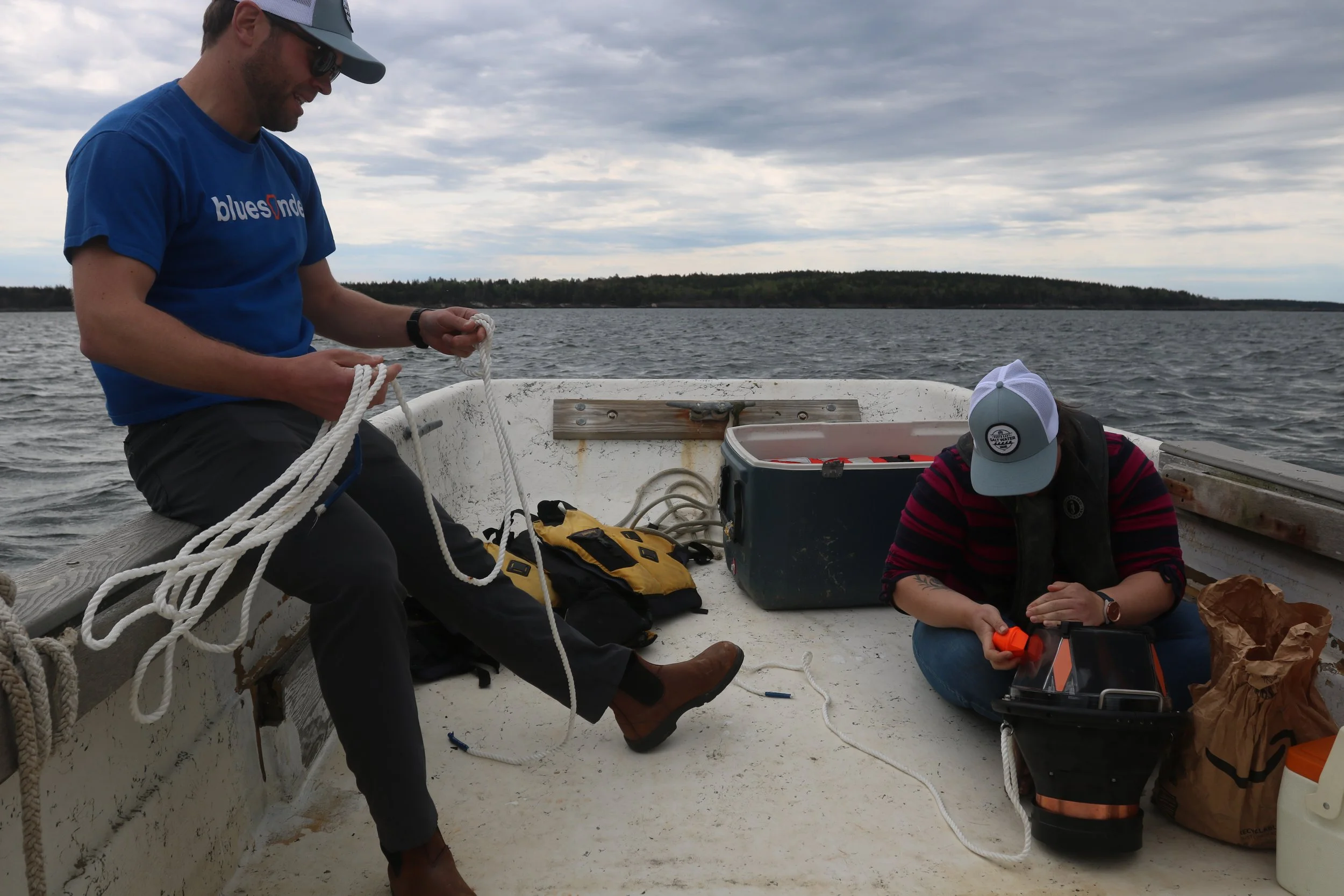
Kate (DMC) and John (Bluesonde) finagling the deployment set up. Though every deployment requires slight adjustments, it was clear that Kate had done this a few times before.
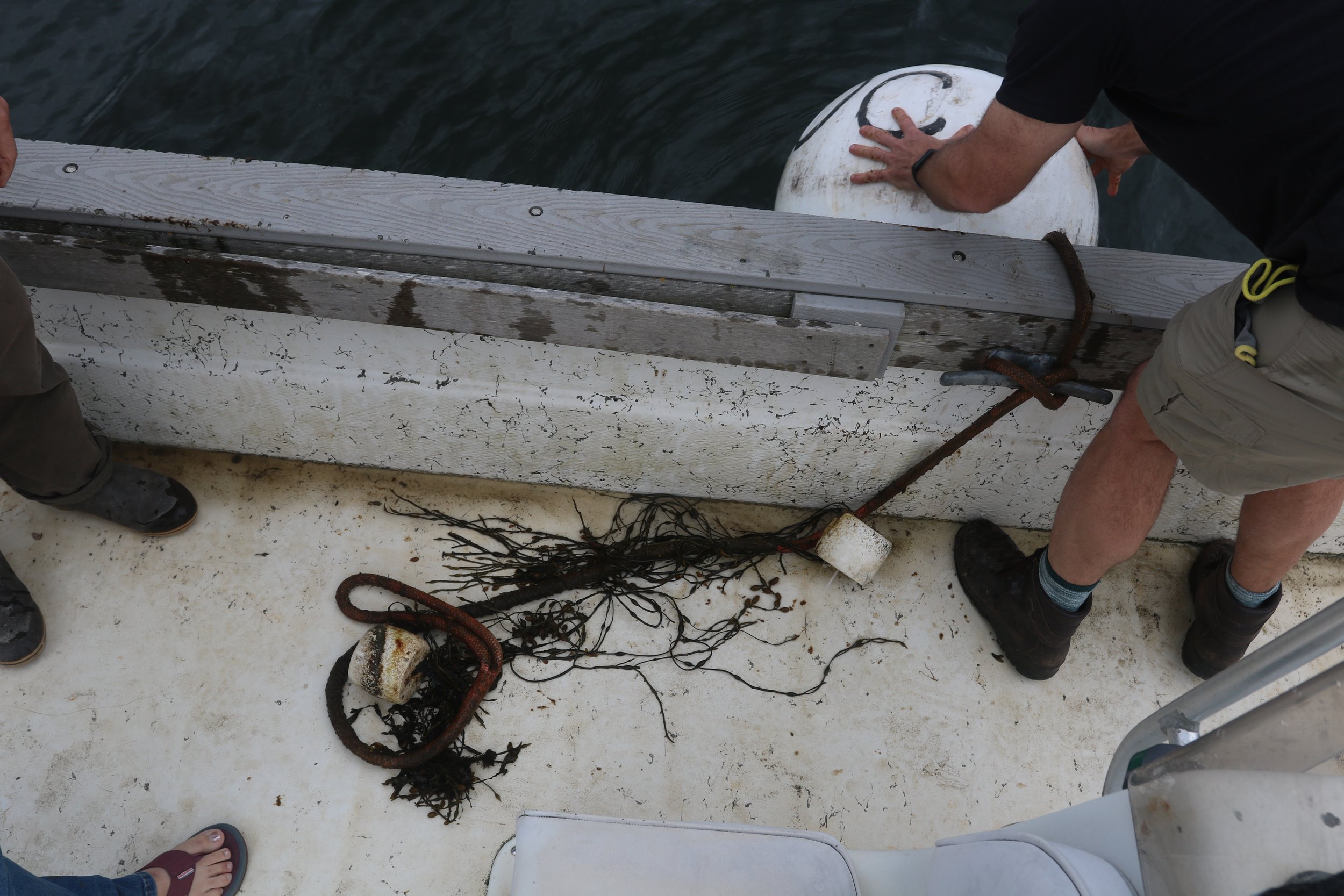
John hoisting the buoy.
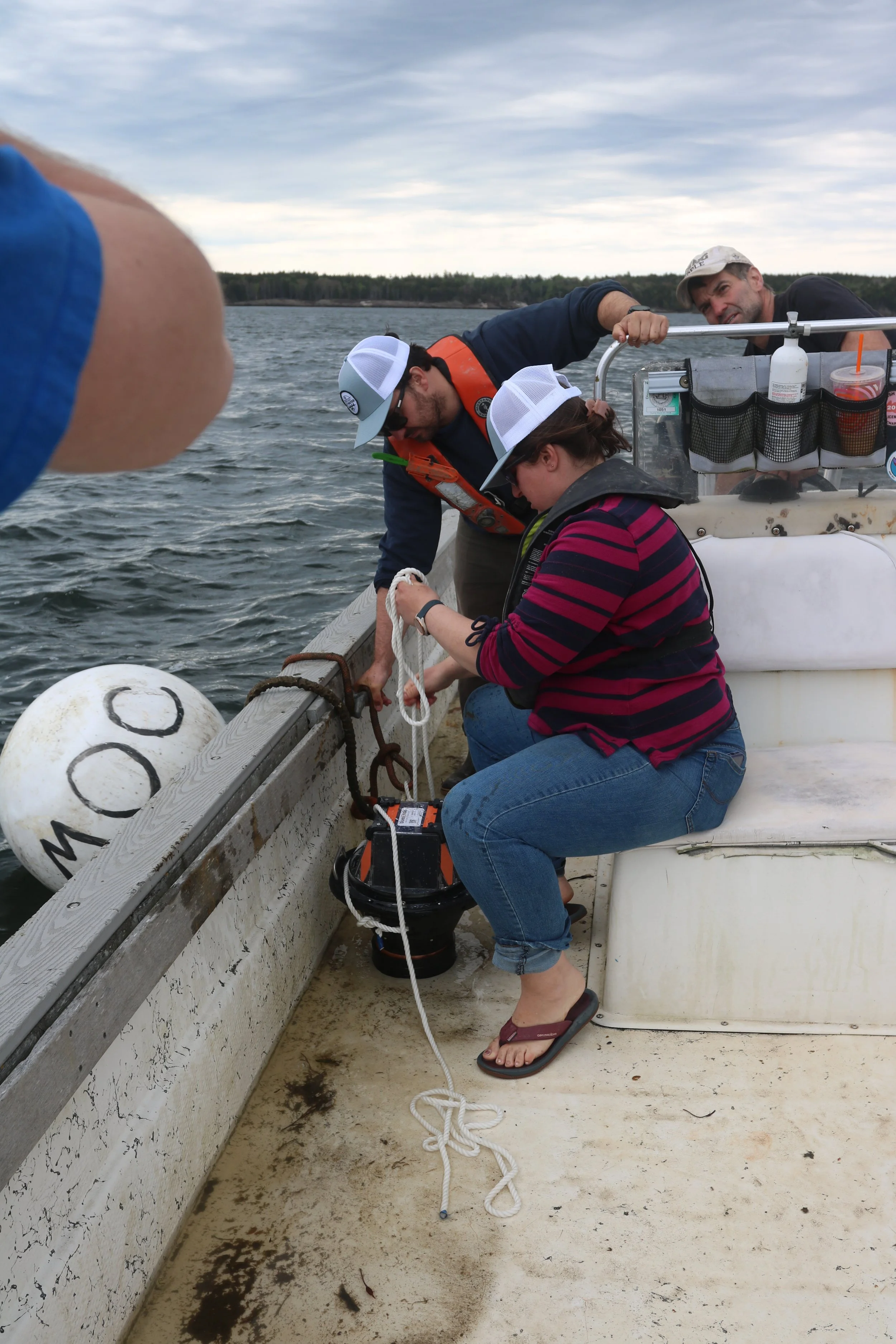
Kate securing the sonde.
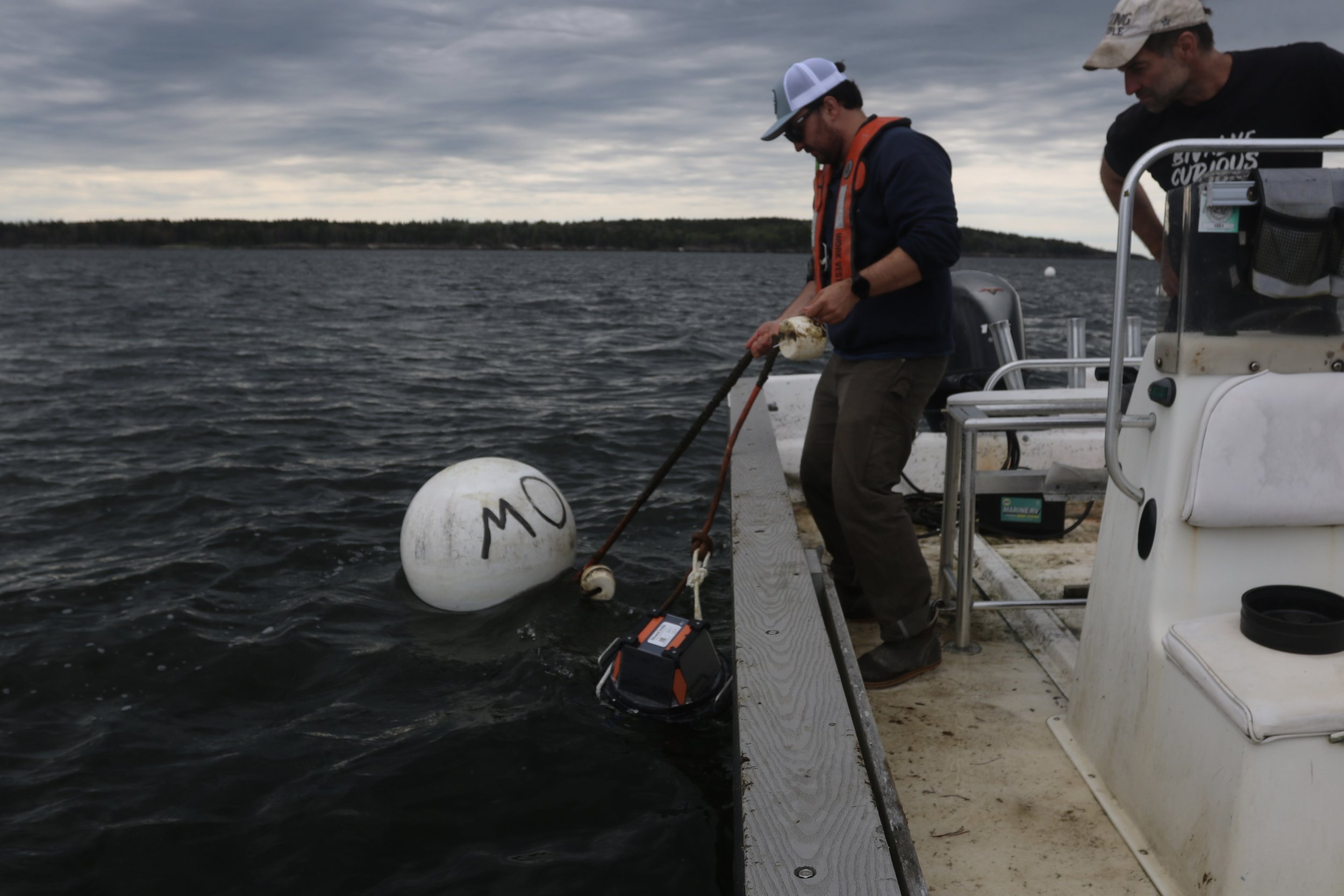
Tom deploying the sonde, John looking on, and the clouds deciding to thicken or disperse.
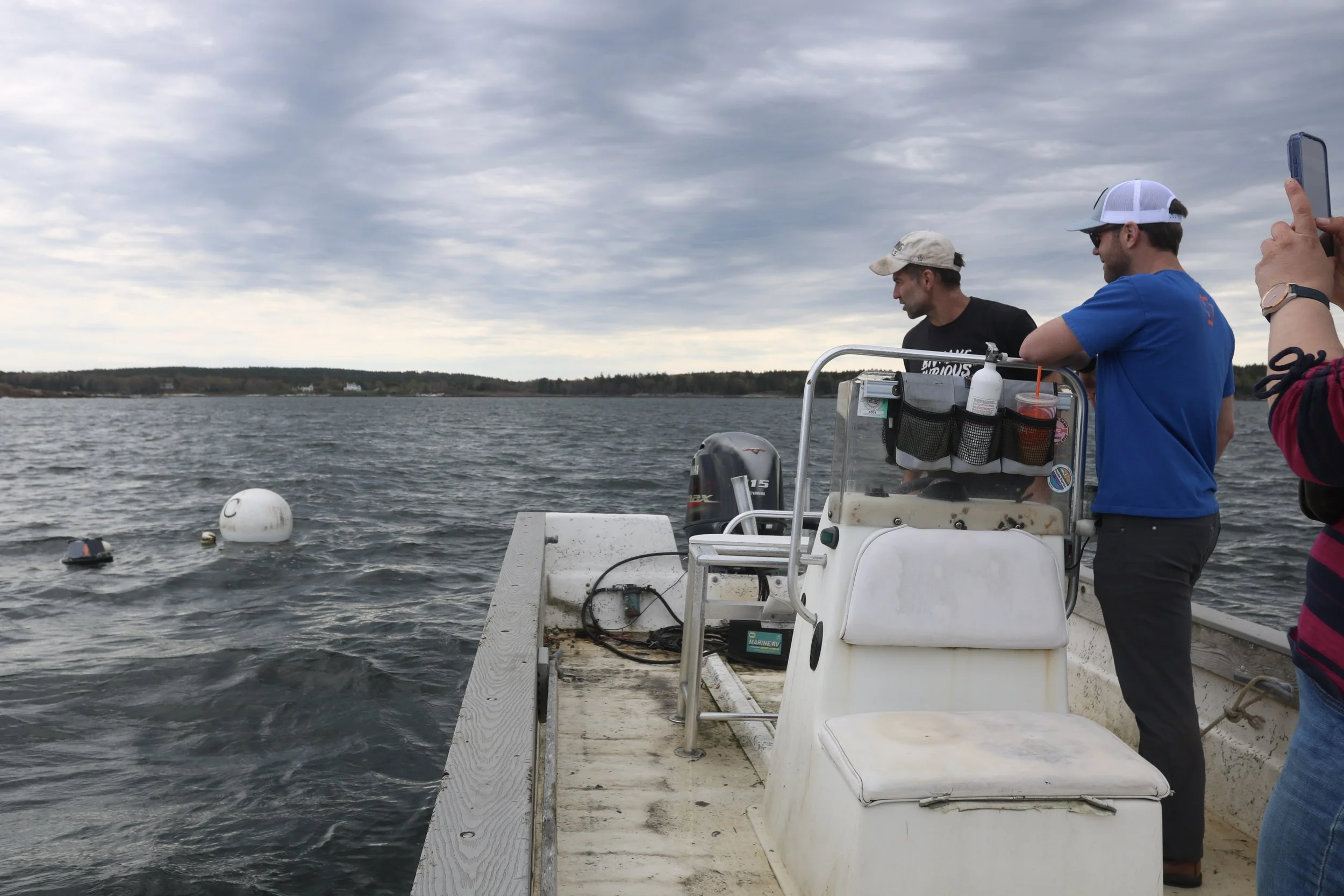
Fair thee well, sonde!
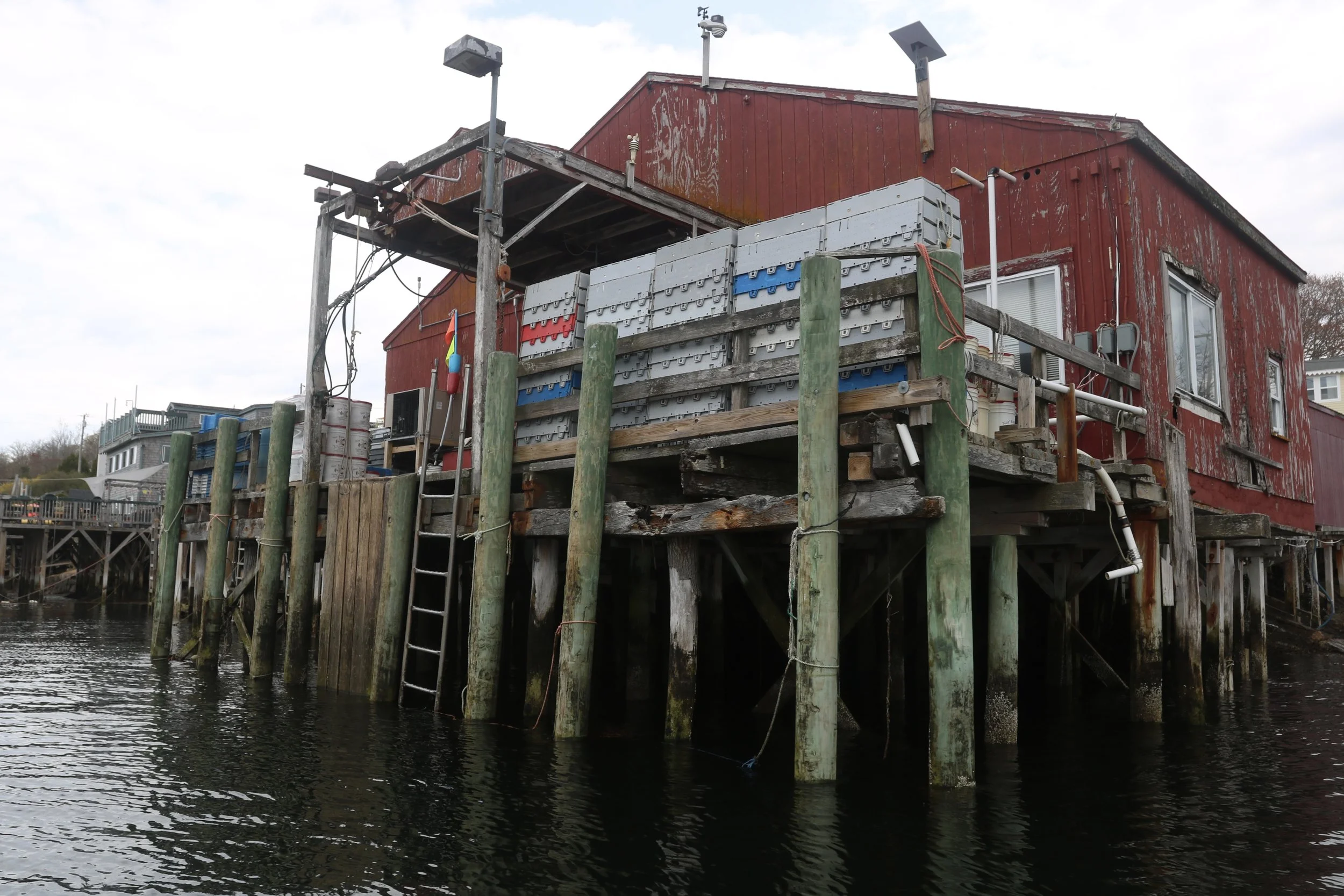
Familiar commute views. Small Point Fisheries neighbors Base Camp.
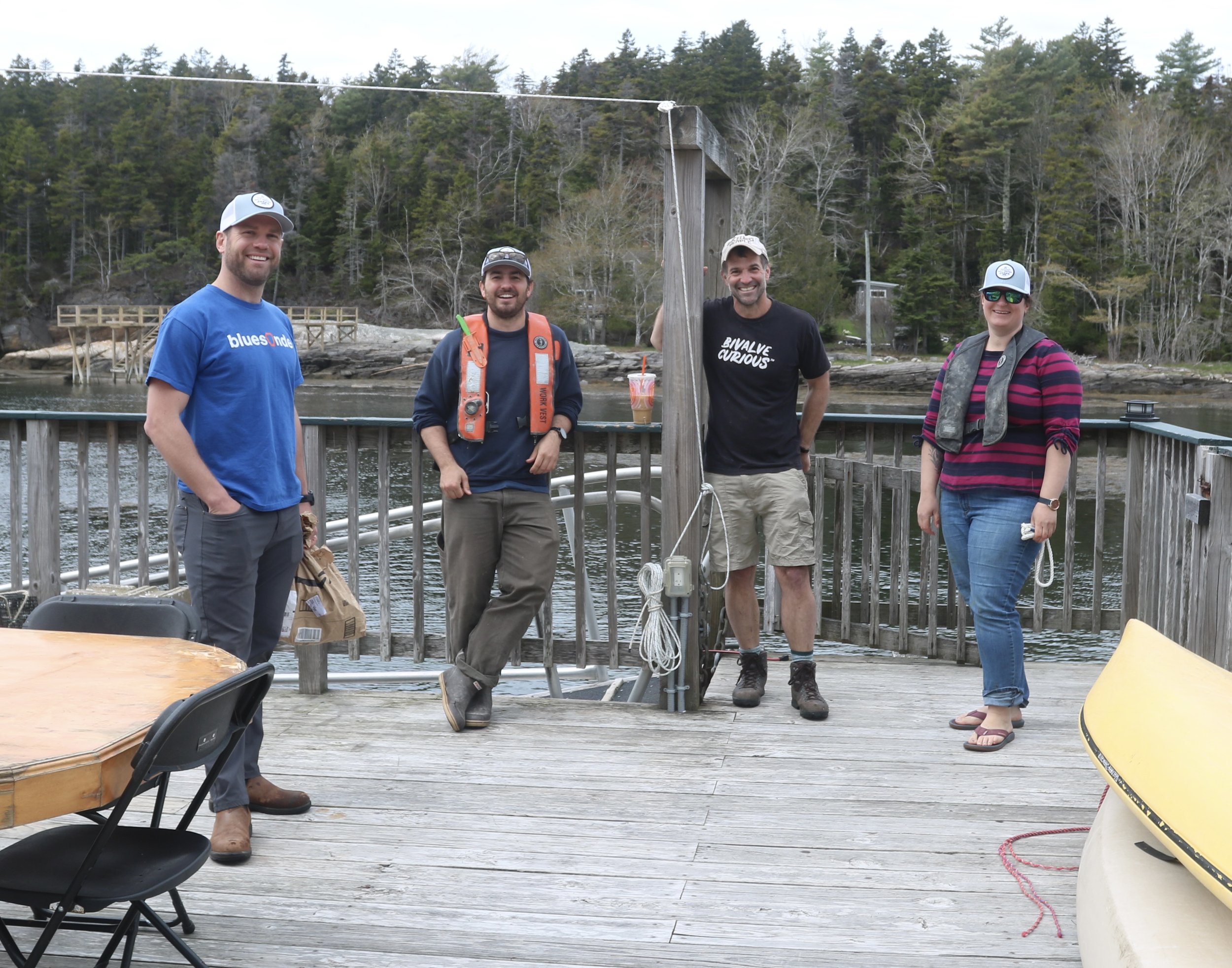
Successful crew.
As we arrived on the dock, Bryn and Joe Jerome and Kelly Morgan were meeting a group of Breakwater students for a morning of oyster school. Farm tours, shucking lessons and tasting adventures!
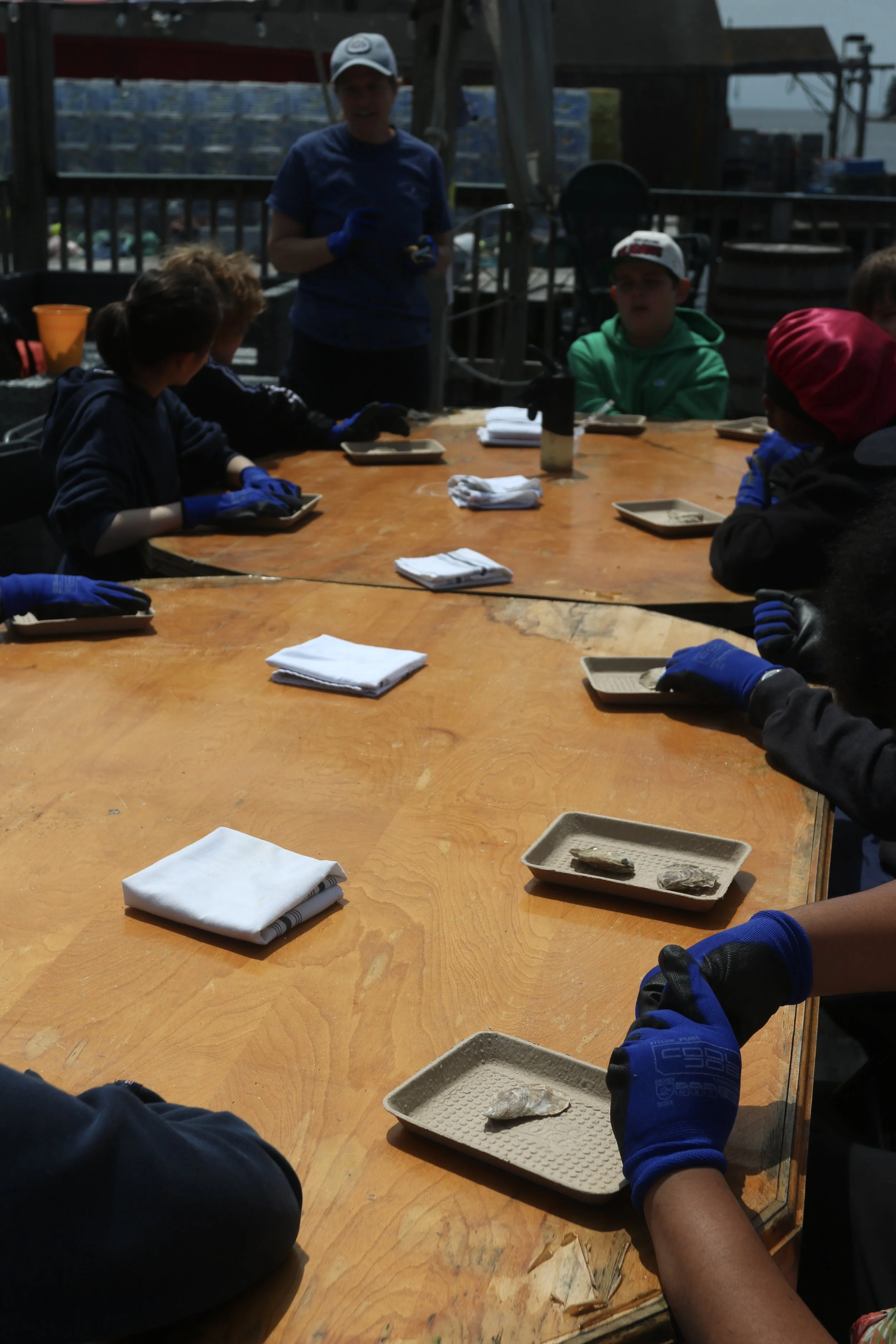
Many young hands at work, learning, shucking and slurping. Bryn leads the kids through the motions.
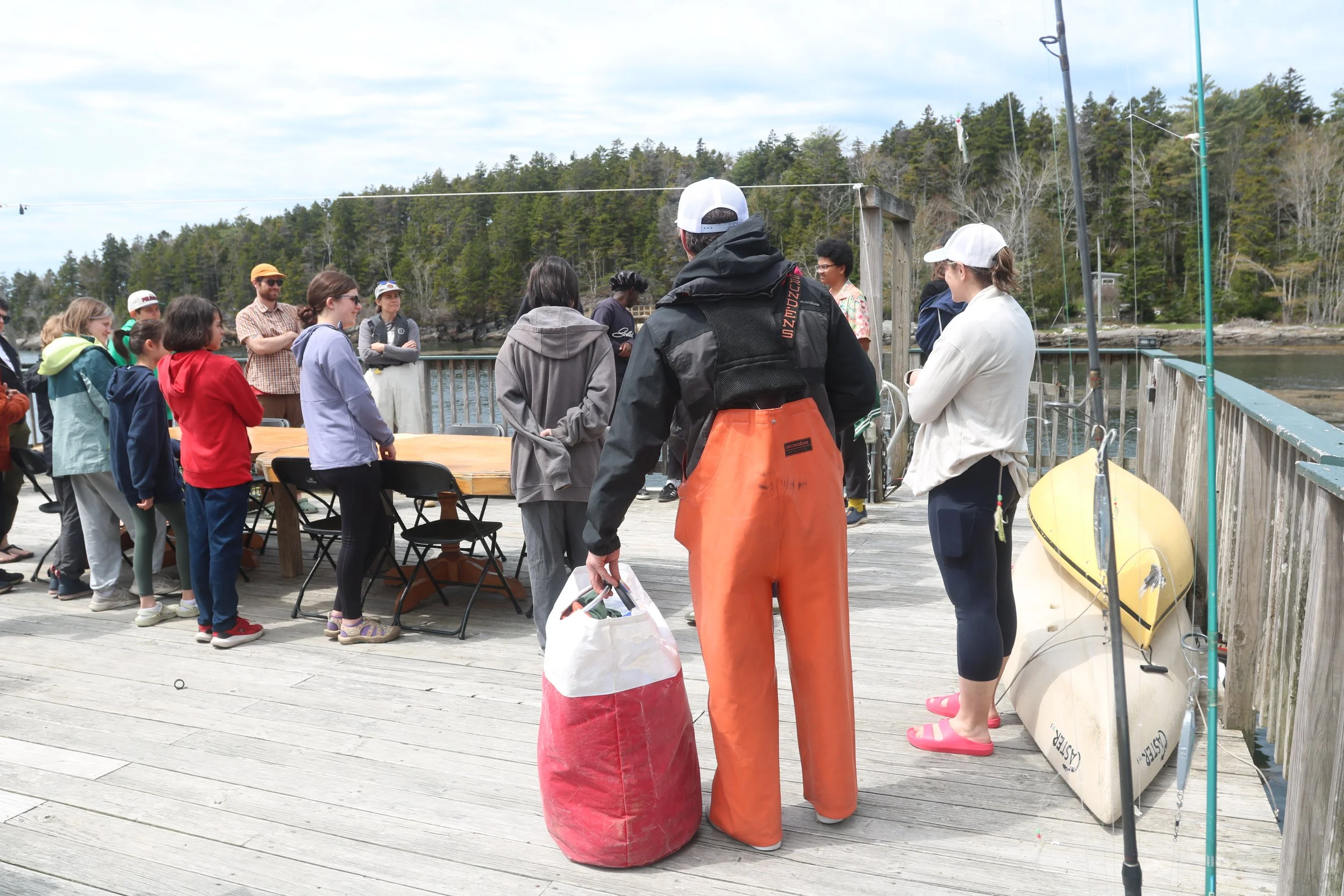
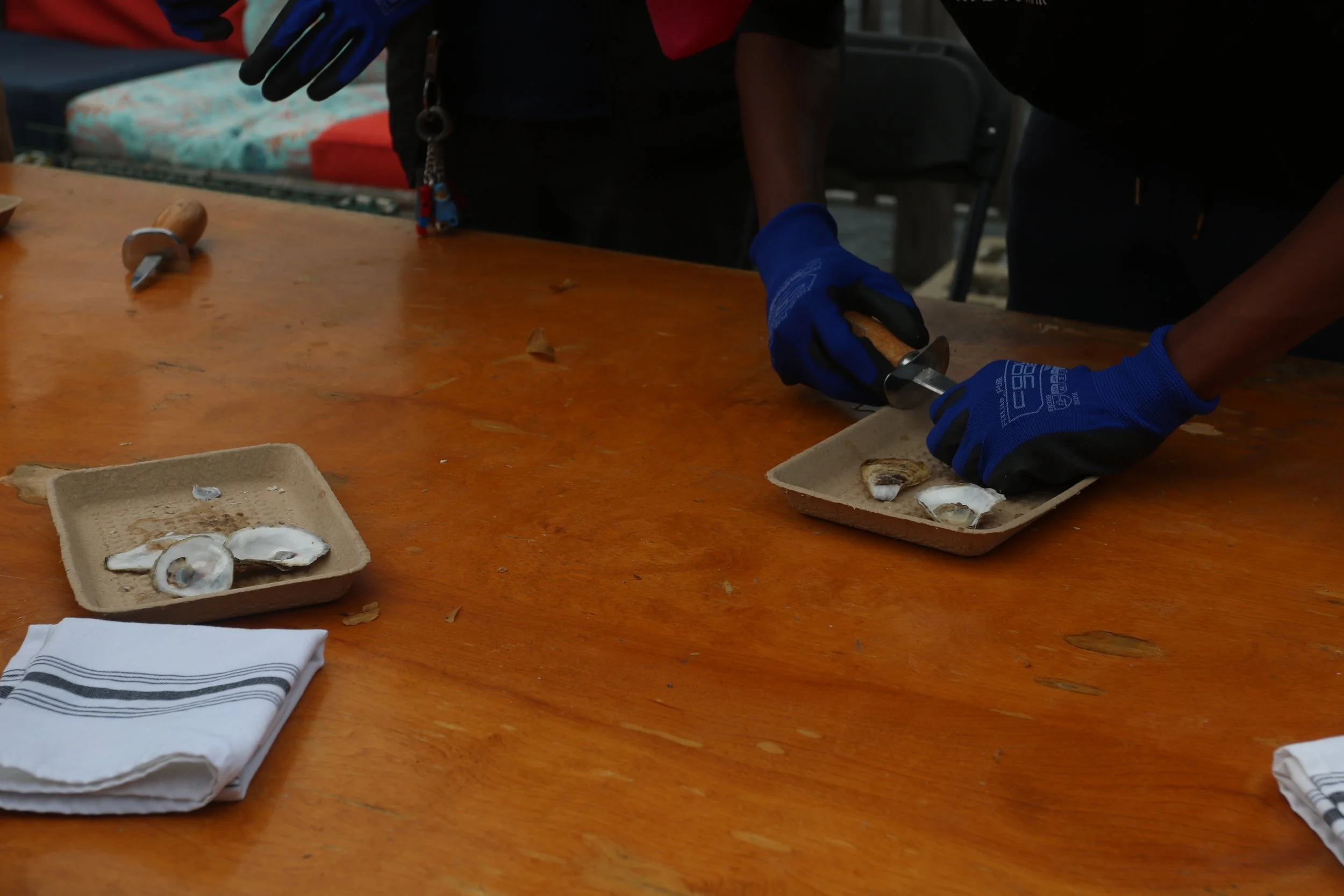
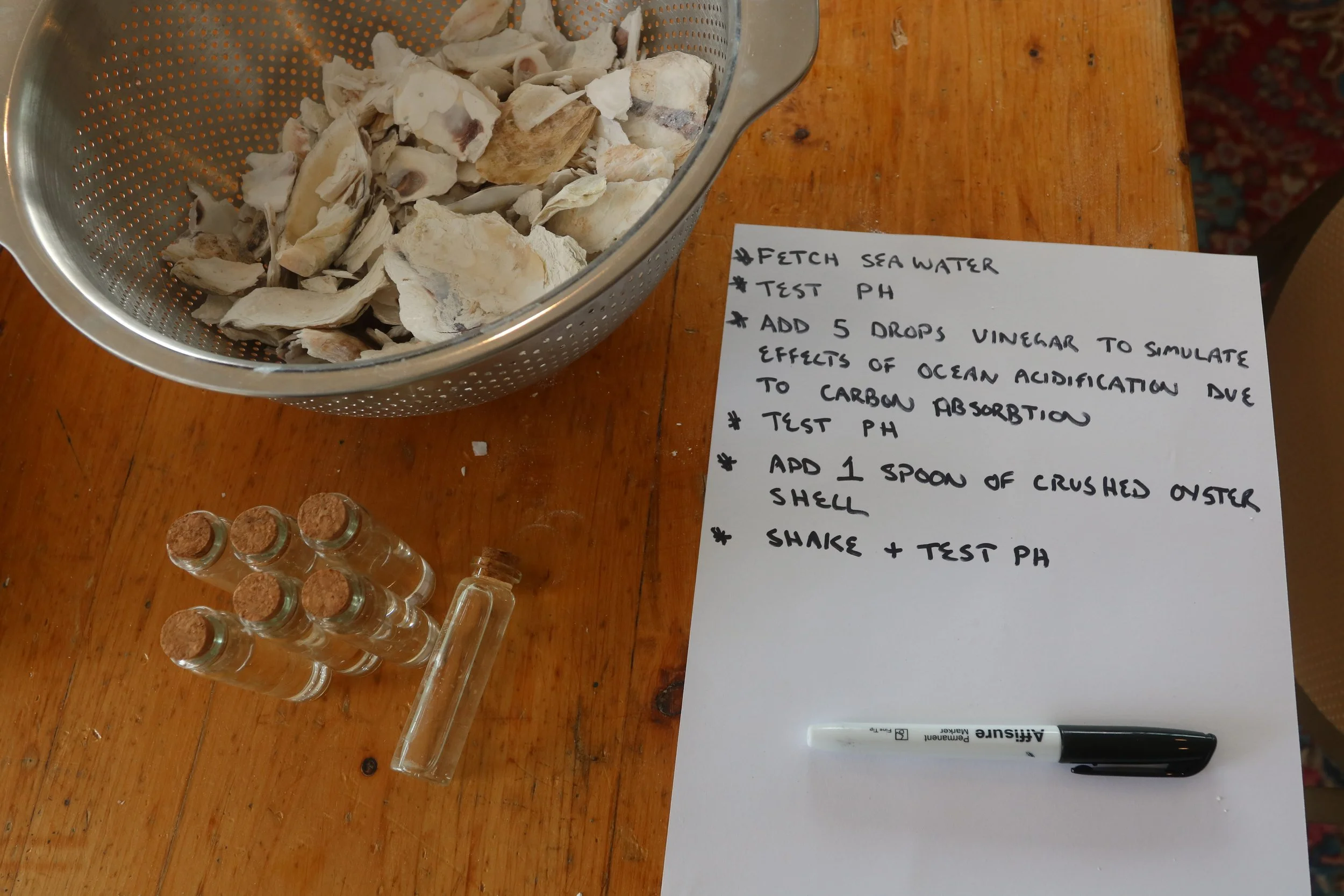
While half the students shucked and learned about ocean acidification’s impact on shellfish, Joe and Kelly took the rest of the students out to Maine Oyster Company’s small oyster farm.
Upstairs, I drank coffee to excess, had some useful and not so useful Zoom meetings, frowned at the clouds, and caught up with John, who had been gone a big chunk of the winter, exploring the Aspen oyster market and mountain community.
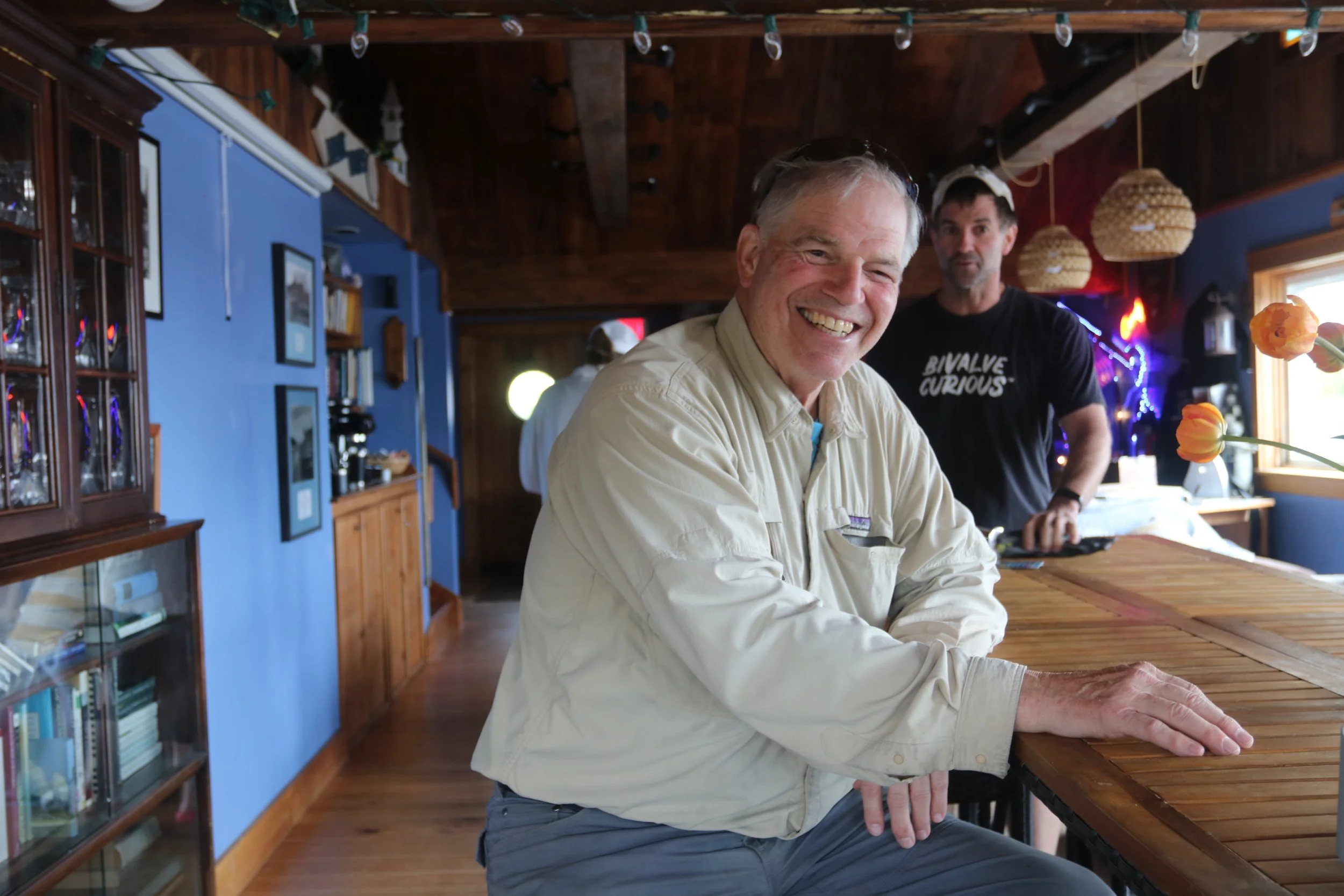
Rodger stopped by next and we chatted about West Point history. (I seem to have caught John by surprise here.) It was a pleasantly busy day. Though I didn’t get a chance to see Jillian, I did see some of her new work laying out later. A bright close-up of lobster claws, fresh from the pot.
At midafternoon, the town law descended. Erik Halpin, Phippsburg’s Shellfish Warden (and Chief of Police) arrived, quickly followed by Peter Blachly, the new Harbor Master.
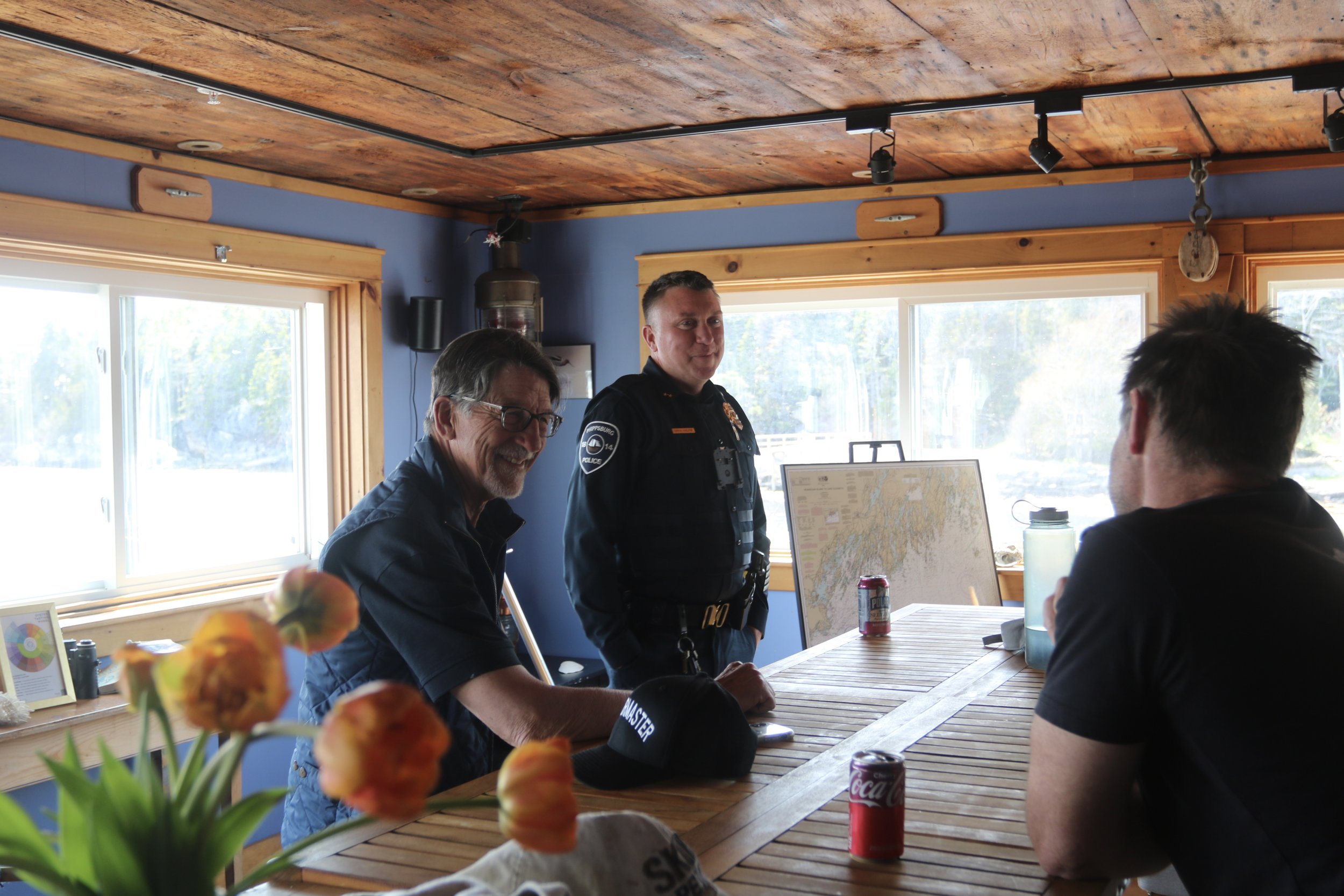
Nothing was amiss! The four of us were simply planning a summer event. As ever, the Herrigels are offering the old general store for this community open house. This will be a moment to celebrate the collaboration needed to live in a place like Phippsburg. Most folks here know that the shoreline is a finite resource in which, in good times, we should all be able to play, work, live and learn. Base Camp is a perfect place to celebrate such collaboration. For in the scope of modern shoreline infrastructure, Base Camp’s open-door, community-forward ethos, as Erik so adeptly summarized, “is absolutely unique and wonderful.”
Stay tuned: More details of this mid-summer Shore Day fest coming soon.
(If only we all looked as heroic as MOC’s turtles.)