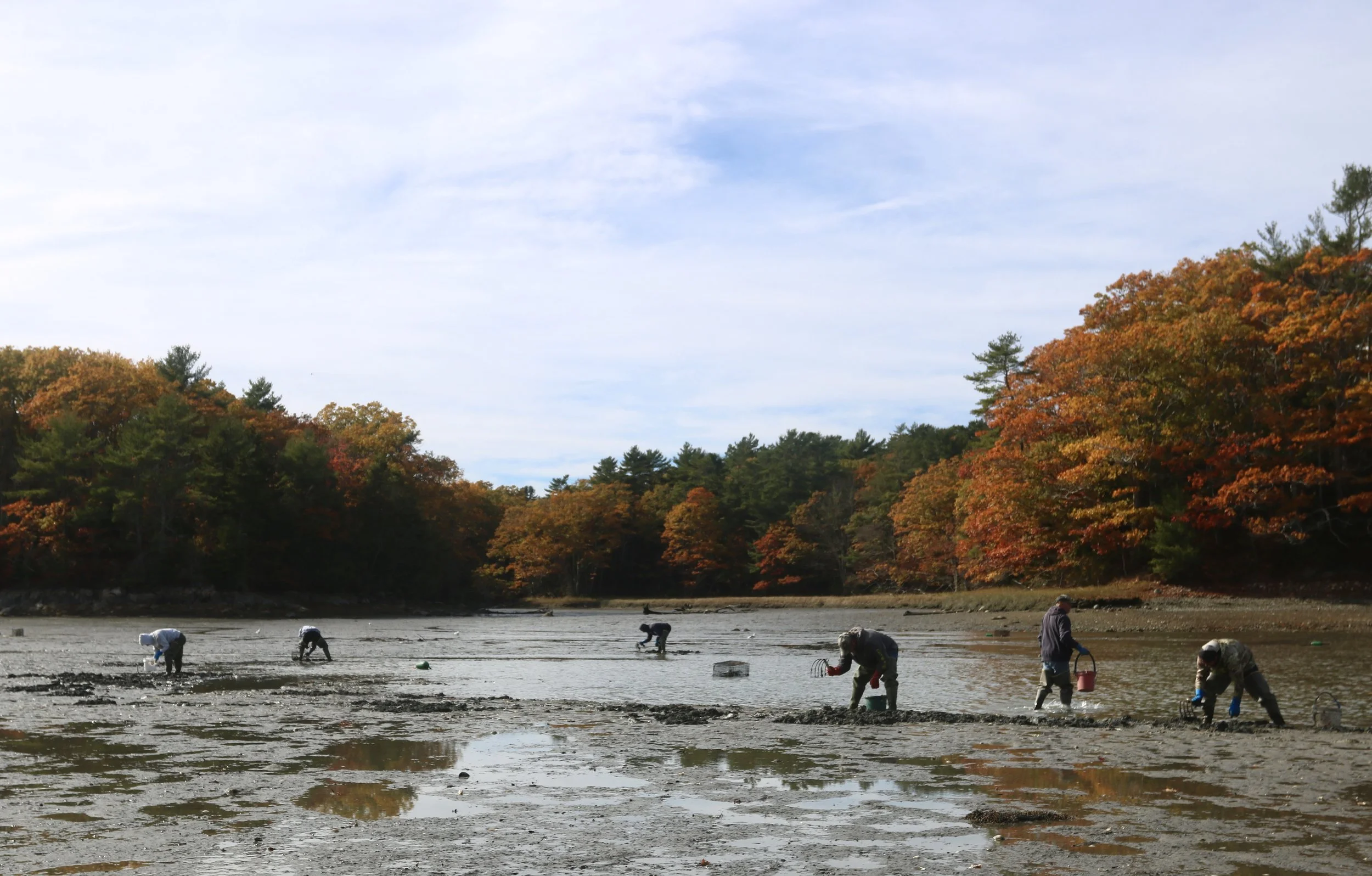
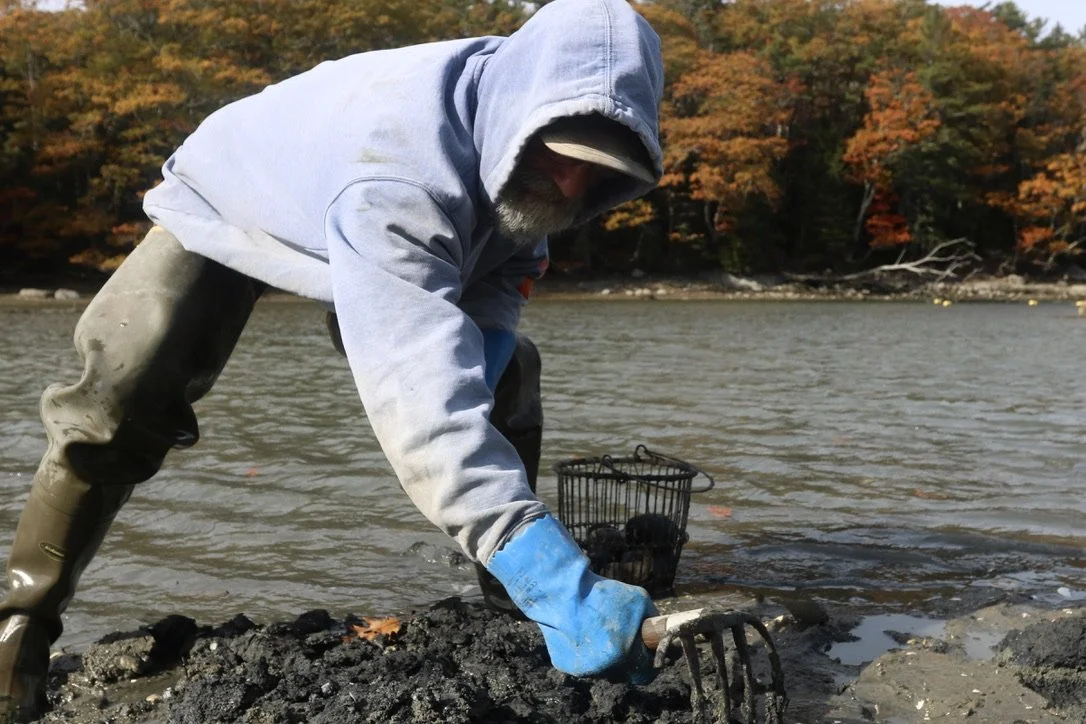
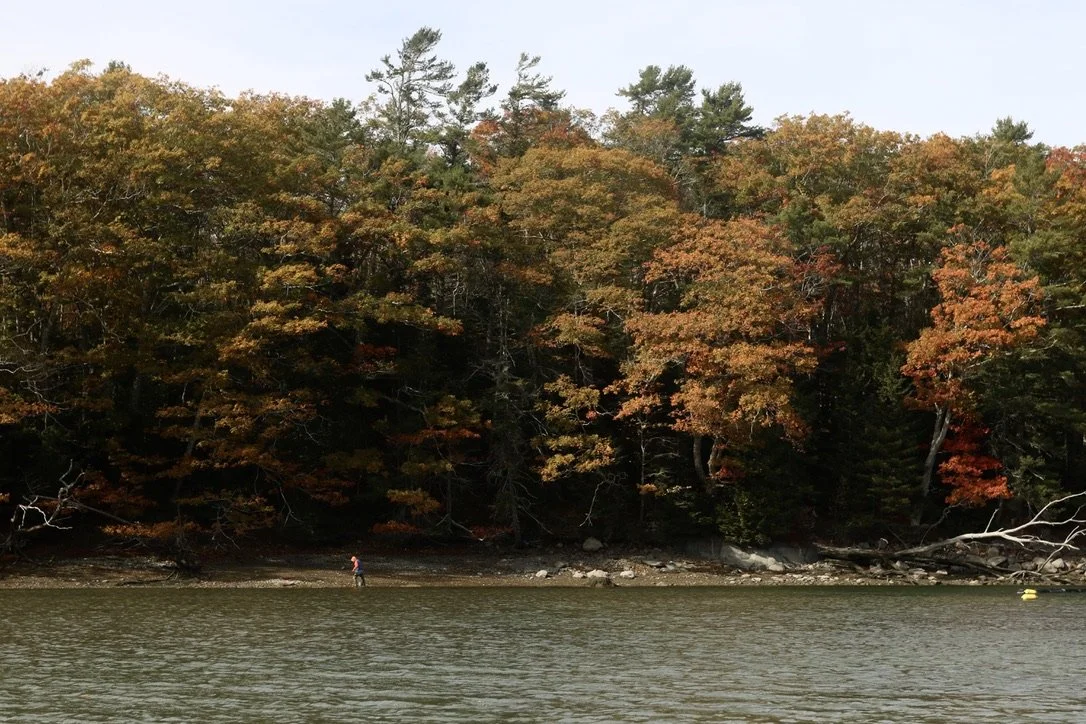
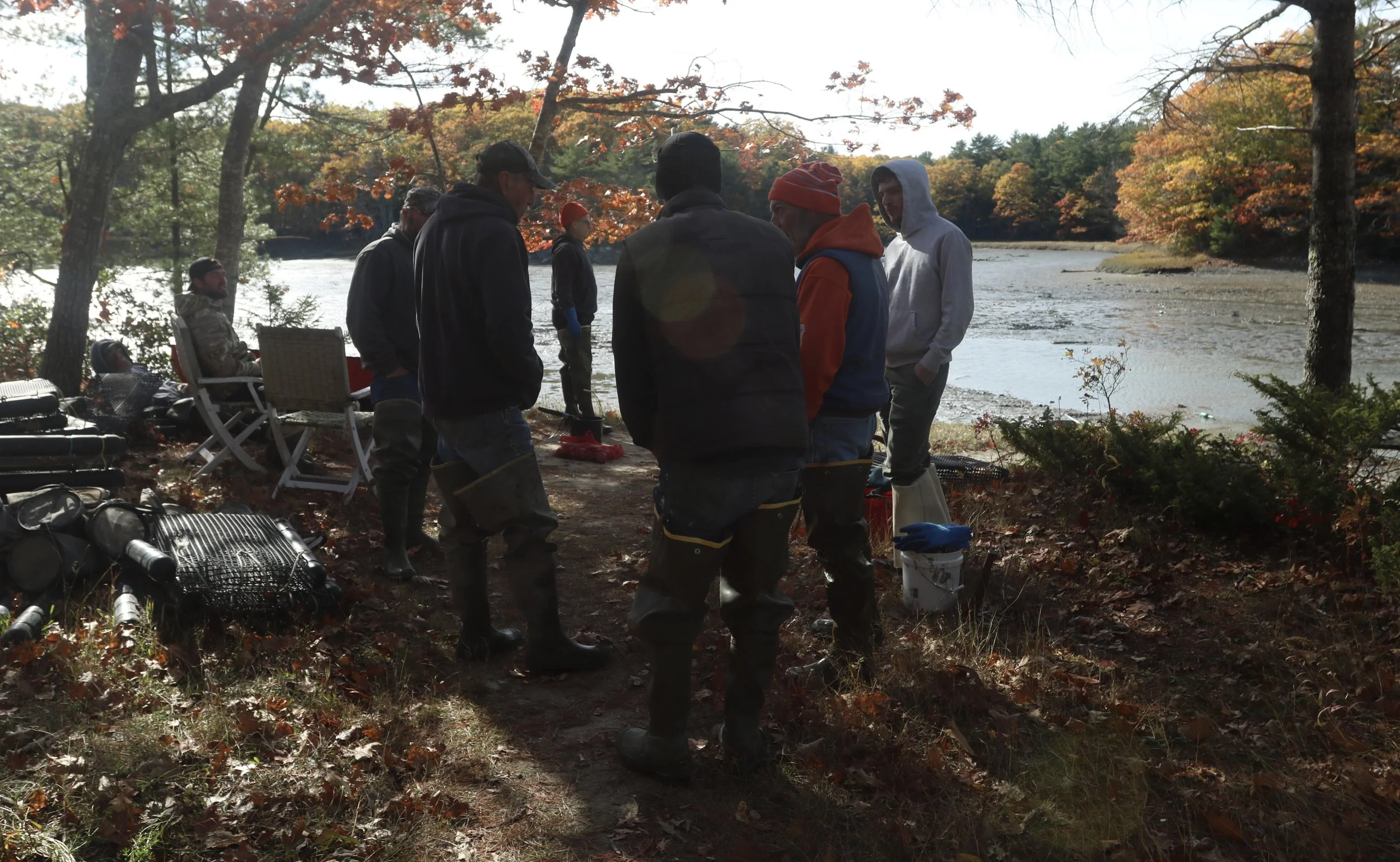
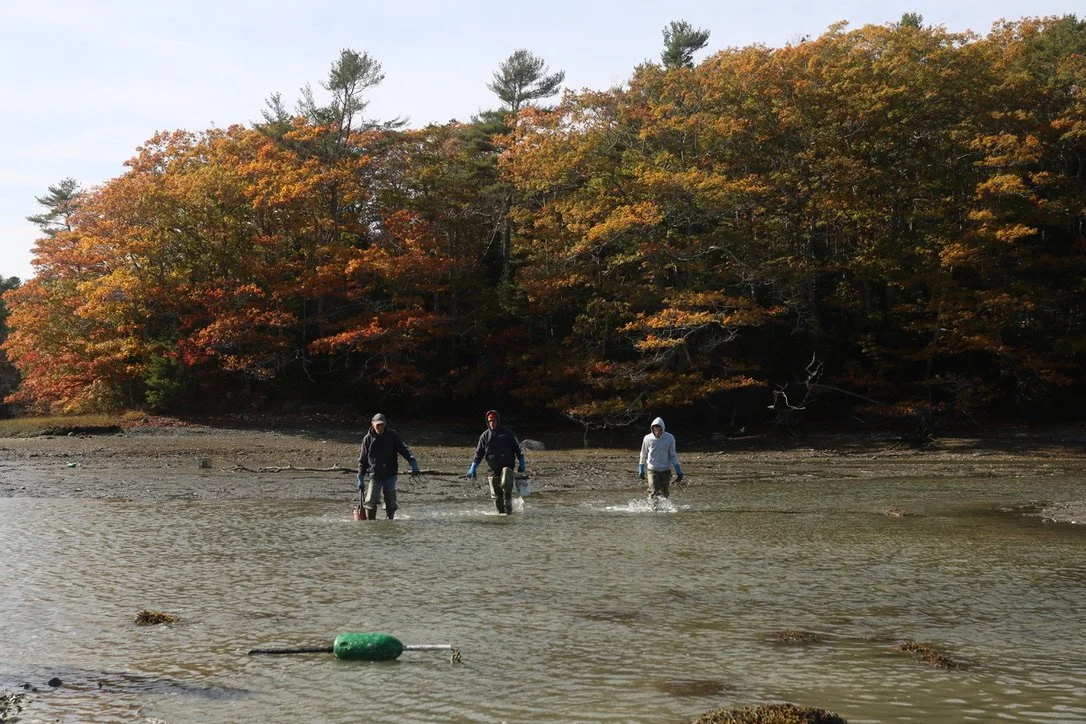
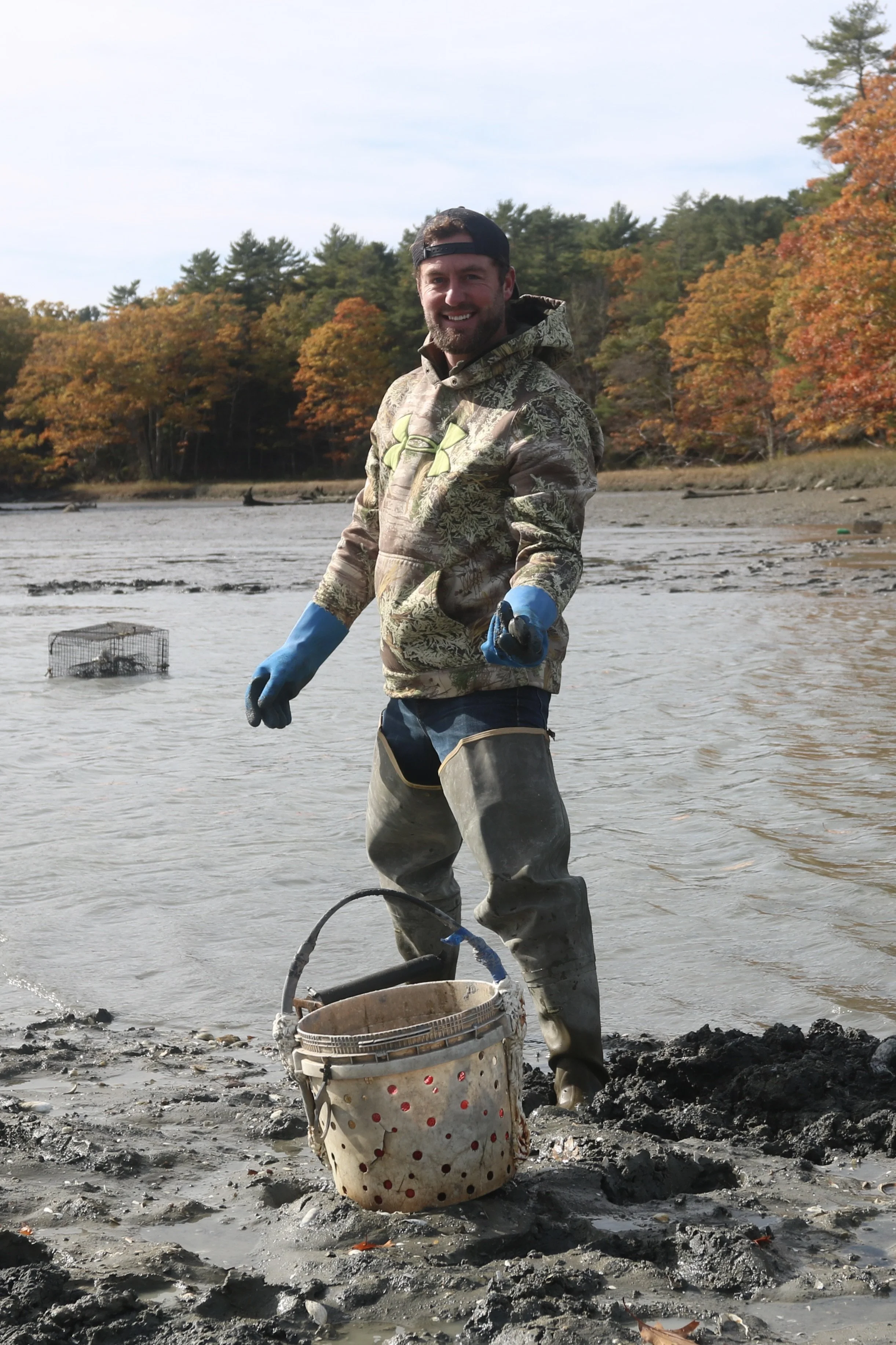
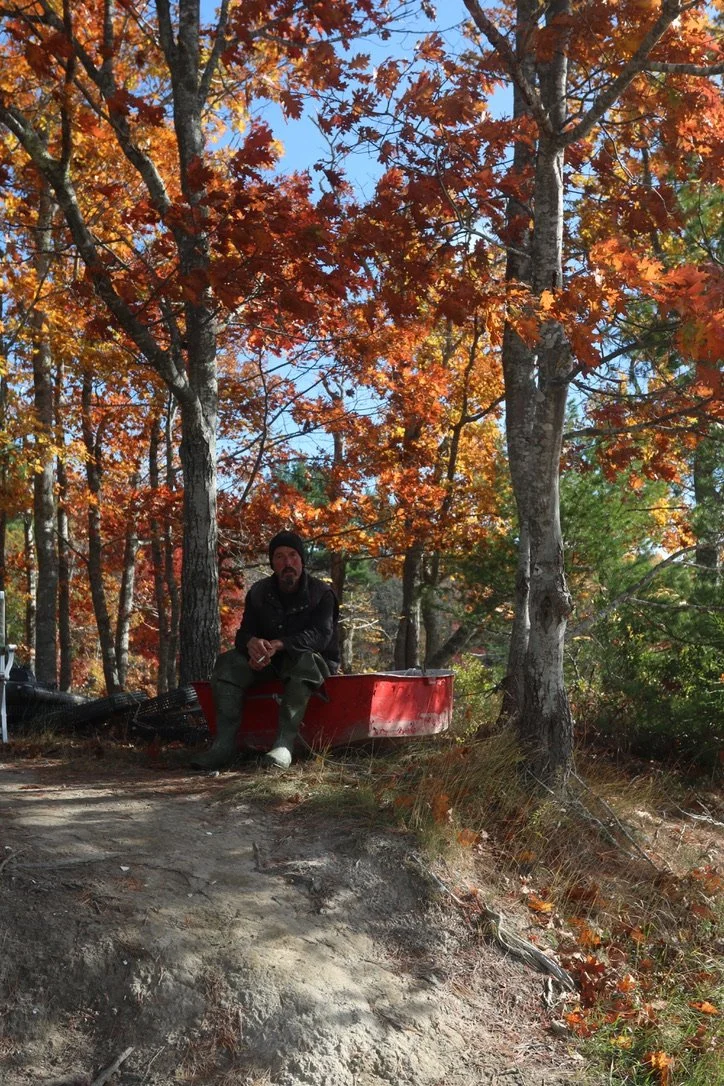
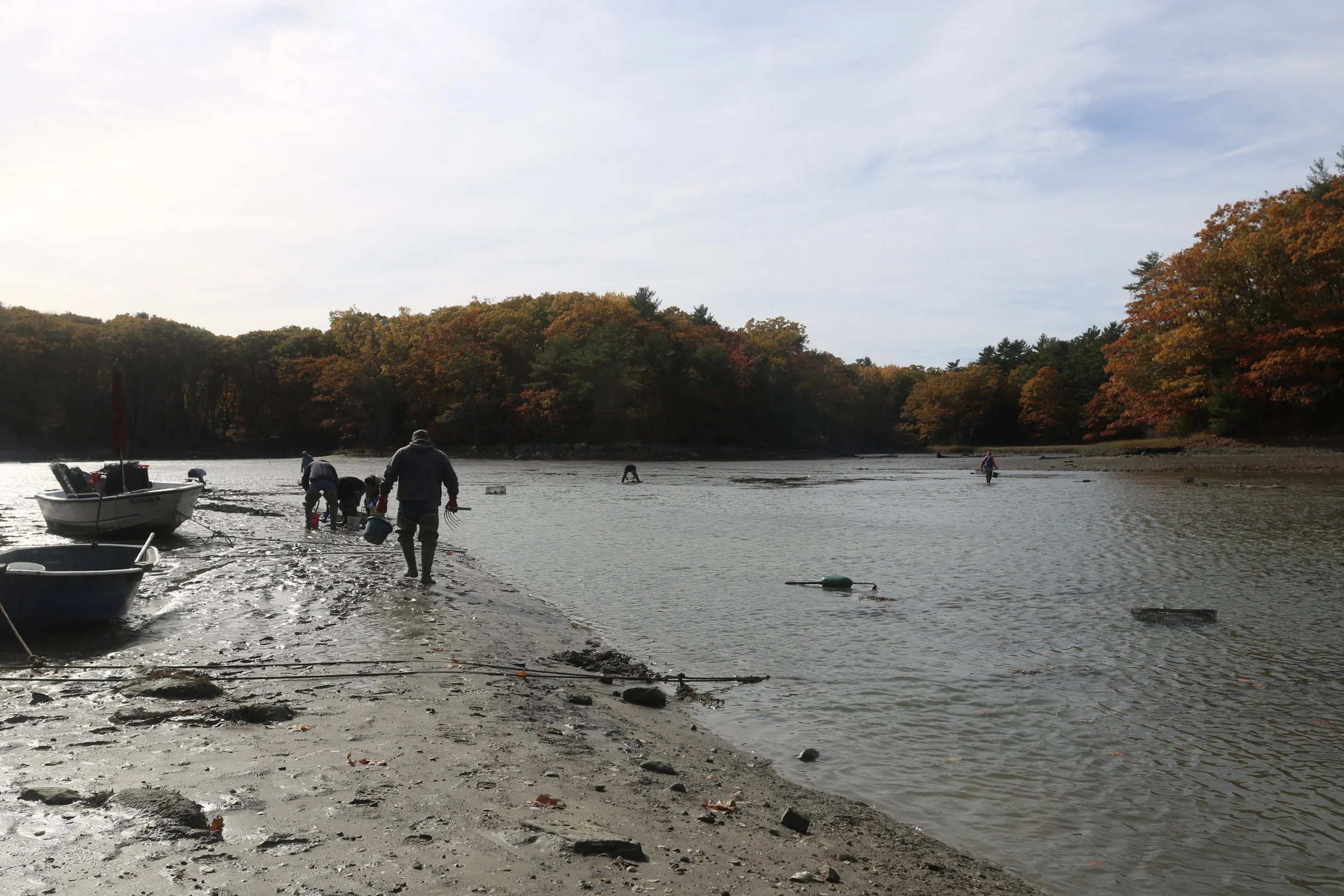
Here’s a piece on the arduous task of planning futures in times of big change, accompanied by photos from an afternoon of conservation work with the Phippsburg diggers. The diggers are harvesting quahogs to seed other flats, testing out the possibility of and spreading bivalve diversity across the peninsula. More on this collaborative work below the main text.
A FRIEND WHO studies sediment in high latitude rivers recently sent me an article about the Alaskan congressional race. Salmon, rivers, and offshore fishing trawlers were foregrounded. “This made me think of you,” she said. And then she quoted the article, with no context: “Fishing ruins you for an actual job.” She thought that line would resonate.
I read the piece. The quote, out of context, could almost be a joke, as though the speaker is grinning, shrugging at himself. But it’s no joke. It's embedded in a story about a growing effort to protect salmon across the political spectrum and the human side of ecological fall out.
SALMON, SALMON HABITAT protection, and fishing rights are big forces in Alaskan politics. “Fish, Family, and Freedom,” senatorial candidate Mary Peltola’s campaign ads repeat. Salmon have bound human communities together and to cold waterways for millennia. Today, they remain a fundamental part of Alaska’s human and greater-than-human ecosystem, and feed multiple strata of the economy and community.
But salmon populations are, like so many marine populations worldwide–and like ours here in Maine–at risk. In Alaska, jobs in small commercial fisheries decline and subsistence salmon fishing falters. A cry rallying against large offshore factory trawlers has grown in volume over the last decade. Salmon are caught as bycatch in pelagic (midwater) pollock trawlers and are, if not saved for donation to communities and schools, discarded overboard. (This possible donation is a rarity for bycatch, indicative of salmon’s cultural and material significance. They are not always saved.) This sort of waste is an obvious ecological immorality.
This bycatch, however, cannot likely account for the entire decline of the salmon fisheries. (I used to work on these vessels. Though rare in my experience, the sight of a silver-bodied salmon crushed amongst the mottled brown and cream of the pollock was jarring.) Instead, the bycatch is one part of a compounding system of climate change (marine “heat blobs” travel up the Pacific Coast), upland development, geologic extraction, and new viruses that all harm the health of the wild salmon populations. The common pattern? Near-term corporate profits have been protected over the long-term functionality of ecosystems and sustainable human community.
OVER-CONSUMPTION AND MISUSE of a resource is no new human thing–nor is it solely a human thing. “People,” American philosopher Donna Haraway writes of early humanity and its long position within the wild flux of this entropic planet, “joined the bumptious fray early and dynamically.” Living things consume what they can in a given area. That consumption need not or cannot always reach the area’s carrying capacity. Sometimes it does. Thus, Haraway continues, contemporary ecological and social global devastations “have to do with scale, rate/speed, synchronicity, and complexity.” That is, the rate of and force with which corporate power can extract and change the earth for capital gain is growing. Our capacity to reign it in with political and collective moral structures has not yet caught up. (That is, we haven’t yet reprioritized protection of place and people over profit.)
We know that the economic structure of our current culture requires constant growth. We know that as the might of extractive technology increases, so does the need for and ability to make competitive profit. We know that this model requires the majority of people to adhere to this system, engaging culturally and materially, in various degrees of subjugation and domination. We also know the basic problem with this model: There is only one blue planet and it does not increase in tandem with the capacity for extraction. There is a fundamental friction between the size of economic growth and living in a world of ever more finite resources.
Perhaps more succinctly, I hear these sentiments from Phippsburg clammers all the time. We talk about how mudflat ecosystems are changing, likely harmed by increased upriver development and warming oceans: “It’s big money,” and, “They won’t ever listen.”
MY FRIEND WAS right–that quote, “Fishing ruins you for an actual job,” does resonate. Commercial fishing and other labor bound to the patterns of the seasons and tides shifted my idea of what a working life could be–maybe even what it should be. As it has, I’m sure, for the many, many people who currently work or have worked on the water. As small fisheries falter, people look for new employment–and try to make sense of a different shape of life. I think it's like trying to rearrange the deepest patterns of your head. It’s not comfortable.
But let’s return to the particular language of this quote. Its delineation between fishing and “an actual job” underscores a strange, but familiar notion: A job that doesn’t keep you at a desk, or tied to a phone, or wading through a heap of emails, or participating in the weird and abstract ceremonies of the corporate globe, but lets you out into the rhythms of the planetary system, the tides, the seasons, the shifting populations of marine species, is no job at all.
Yes, this word “actual” is so interesting, suggestive of what can be considered “real” and “unreal”.
A FEW WEEKS ago, I referenced maritime historian Helen Razwodowski and her postulate that the human-ocean relationship is typically of three dimensions: food, transport, and myth or culture. I noted that gentrification in Maine is shifting normative standards of shoreline use from the first two dimensions to the latter. I want to talk a little bit more about that here.
In social sciences, a paradigm refers to one’s system of belief, the imaginary scaffolding of a life, a worldview that connects actions and thoughts to one’s surrounding material planet and social systems, and thus shapes and is shaped by those systems. What is “real” and “unreal” might equate to what is worthy or not worthy of attention and care in any given paradigm.
Increasingly, we talk about amenity migration–gentrification–as a driving force of economic change on this coast. (This is a hot topic of study across various fields lately.) We know that shifting systems are contributing to increased amenity migration. It’s largely the same shifts that causes migration to increase the world over: climate change, economic turmoil, a growing imbalance of wealth between social groups, and the desire for a better, or different, life. Here in Vacationland, as in other scenic, rural places, an increasing ability for remote work also drives this demographic shift. Dan Devereaux of Brunswick stated that gentrification was one of the most complicated problems facing the working waterfront. In Maine, we’re talking about this rising phenomenon a lot. I hear it’s going to be a central topic at the upcoming Working Waterfront Conference.
We talk less, however, about the cultural or paradigmatic impact that this demographic shift is causing. I think this is in part because we are less confident about how ideas of land and water use and protection differ between social groups, and how those differences act on each other. We know that amenity migrants often feel less disenfranchised from and have more time to engage in town-level organizational structures like committees and boards. This involvement is not necessarily negative, of course, and can result in some truly positive outcomes and mutual knowledge sharing, but does mean that there grows an imbalance of represented social groups.
I’M TALKING ABOUT these social groups in coastal Maine like they’re binary. Life-long resident and from away. Fishing and non-fishing. Pro-conservation and pro-development. We know, of course, that this sort of binary thinking is rarely accurate. We are each of us a hodgepodge of belief, identity, and disparate ideas of what a good future looks like–and how to get there.
The recent shoreland zoning moment, for instance, underscored both positive intersections of similar conservation goals between totally disparate groups, but crucial differences in the comfort level of those groups to engage publicly in a potentially contentious issue. In Alaska, as the article my friend sent noted, “coalition governments are not uncommon in the state, where politicians are fond of saying that pragmatism trumps partisanship.” In Phippsburg, I think pragmatic microcoalitions are not only possible but necessary. The mutual ability to work together across social groups is still finding its footing in a moment of big change.
Like many of you reading, I am not from Phippsburg. As I write about this place, I’m hyperaware of this from-awayness. I often feel as though I’m gesturing in the dark. I participate in various committees and do my best to advocate for fisheries, but I know I don’t always get it right. I’m lacking the education in Phippsburg’s cultural nuances, the histories that shape the social strata and its relevant power dynamics.
Yet out of this muddle and with concern for the future of ecosystems and socioeconomic equity in coastal Maine, a few questions rise for me:
How can diverse opinions of land use better cohabitate on a thinning shoreline?
What are the steps toward collective agreement that protecting both ecological systems and socioeconomic equity is imperative for the mental and physical wellbeing of all?
And, crucially, in an increasingly resource strapped and socially confusing time, can embracing a new, more precise method of collective planning be introduced without further disenfranchising people?
LET’S TURN BACK to salmon. They are beautiful creatures. Their annual, sudden return to the inland water is like a microseason unto itself. Bears and people and bugs and tree roots eat. The water ripples with a whole generation of fish splitting the current to spawn. Before the industrialization of this region’s waterways, the Kennebec River was home to massive salmon runs, the kind we might imagine when we think of Alaskan rivers. Atlantic Salmon slipped up to spawn in the Kennebec's shallower tributaries and the slow coves that form in river bends and tree snags. “For millennia,” Mali Obomsawin, a musician from Abenaki First Nation at Odanak writes, “the Kennebec River was the nucleus of Wabanaki food-systems, diplomacy, and ceremonial life. After hundreds of years of industrial development, it has become unsustainable for Wabanaki peoples and our aquatic relatives alike.” Wabanaki peoples speak of profound changes to foodways, social systems, and ecological patterns held in collective memory. I’m writing as a descendant of immigrants. Wabanaki peoples’ relationship to this region is of a depth of time and collective knowledge beyond my imagination, and thus crucial to hear and understand, as we try to recalibrate toward a stable future. You can read about the continued push for Wabanaki sovereignty in the state of Maine at the Abbe Museum’s Sovereignty Guide for Allies.
Today, of course, the same hegemonic systems that colonized and industrialized this northeast region persist. The global trade web in which we are dependent participants is based on these systems. The intertwined economic and climatic systems that impact Alaskan salmon impact Maine. There is no place on Earth in which these big systems do not change the land, the water, the people, and material and cultural tethers between.
In Alaska, people protest huge trawlers perhaps because a moratorium on such leviathan fishing is a more possible and immediate action than shifting a global paradigm dependent on the exploitation of people and place.
I’M TALKING ABOUT big systems because here in coastal Maine, and in Phippsburg, I believe we’re at a threshold moment.
Local resources, like the water in private wells, access to the shoreline, even the road and municipal services, are going dry, wearing thin. One new development can drain the already drought-depressed well of a resident who may or may not have the funds to drill deeper. Increasingly, privatized shoreline has a cascading effect on not only the capacity of people to make a living, but the sense of living in a community of mutual care.
As the writer Ruth Moore once said, “Maine is a microcosm of everywhere else.” Our local systems are subject to global changes. The planning of Phippsburg’s future is happening in that pressurized context.
THE LAST FEW hundred years of globalization has done funny things to everyone’s sense of self and place. What is perceived to be real and unreal, I believe, grows fuzzy, as knowledge of other places and people arrives through screens, detached from physicality. We are suddenly not only hyperaware of the scope of the globe, but able to casually make change happen in places we will never visit. We reach into a shelf at Shaw’s and yank salmon from big Bristol Bay, Alaska. We buy fish sticks out of the Aleutian Basin. We flip a light switch and pull from a grid powered by natural gas sucked from a subterranean place.
Systems thinking makes a practice out of recognizing the relationships between the actions, systems, and forces that might otherwise feel distinct. It’s no new thing. Systems thinking is relational thinking: When the rain stops, the well goes dry. When the well goes dry, I may have to go to town for water. When I have to go to town for water, I lose time, money and energy. When I lose these necessities, I am, among many other things, less able to be a participant in town planning processes. When I am less able to participate, my voice goes unheard. When my voice goes unheard for too long, I lose agency in planning my future.
(Perhaps this is reductive. You could extend this relational thinking in infinite directions. But you get the point.) (Marten Scheffer’s Critical Transitions in Nature and Society is applicable and totally interesting, if dense.) (And no, my hypothetical well has not gone dry, but plenty of real wells have, resulting in cascading, compounding life changes.)
When a town has to make decisions incorporating all its interconnected systems of people and place, things get very tricky. As the rate of change within systems increases suddenly, so does that trickiness. This is why I think many coastal communities–not just Phippsburg–are at a threshold moment, a point of critical transition. It's suddenly apparent that the town-level methods with which ecosystems, social services, and community relations were heretofore protected may no longer be adequate.
If they are not–and if most seem to understand that they are not–how do we move forward through funky social dynamics to find a more collaborative, more effective future planning method?
Better understanding of the local and global systems at play in Maine’s coastal communities–and how changing one system inevitably changes others–is crucial for equitable, sustainable planning. Economist Isabella Webber writes that a just future economy must offer "dignity to all.” In Phippsburg, the economy is based on the sustainable functioning of and access to our diverse ecosystems. How would planning change, if “dignity to all” were a standard? What systems, large or small, would we need to better understand?
THE FRIEND WHO sent me the article has listened to me talk (a lot) about trying to step back and forth between the cultural narratives and expectations of fishing–price and tide and weather and seasons of quiet and seasons of great labor and sense of mounting pressure and cultural loss–and that of what I call the “email-work” world.
I am talking now about these worldviews in conjunction with big material systems because the two influence each other. I feel that it's increasingly important to understand how. When fishing is not seen as a real “job” but rather some last, mythic fragment of a heritage tradition nearly gone, I don’t think we take its protection–and thus the protection of and access to marine ecosystems–as seriously as we must. That our fisheries, like Alaska’s, are at risk is true. Let us not doom them by premature exclusion from the conversation, nor forget that poorly planned decisions made on land inevitably spill into the waterways.
The narratives that shape our worldviews are still playing catch up with globalization. We are in the arduous, devastating process of learning how–or if–we can manage ourselves as a sprawling species with too much material power. Culture shapes politics. Stories shape culture. And out of the relational ecosystems of humanity and place rise stories. We cannot change national or global narratives overnight. I think rewriting the narrative, however, will have to begin in places like Maine.
P.S.
Mariculture and the intentional transportation of shellfish spat or adults to potentially more fertile–or readily accessible–harvesting grounds is no new human act. On this continent’s west coast, transplanted clam gardens date back 3500 years. And on this coast, researchers studying human history have noted that oyster beds “are valuable proxies for past human-induced and ecological change.” Fisheries management is as old as the human relationship to water.
Today, in this globalized economy, small-scale, intimate resource management, specific to one’s local environment, and large-scale management of the broader systems that inevitably impact our familiar, ecological homes, are both crucial. Thus, spectral knowledge sets are necessary for spectral management.
Yet it seems sometimes that we lean further from both, moving toward an unhelpful average. This average is at once too distant (or overworked and abstracted) to give full due to the specificities of the local ecosystem (increasing another paradigmatic friction between regulators and harvesters) and too laissez-faire when it comes to the mega corporations whose actions sweep the surface of this planet. Deducing how any one decision, large or small, will impact the overlooked ecosystems and the people who harvest from them is a solid proxy for just decision making.