Photo Essay: Late Winter Trap Work
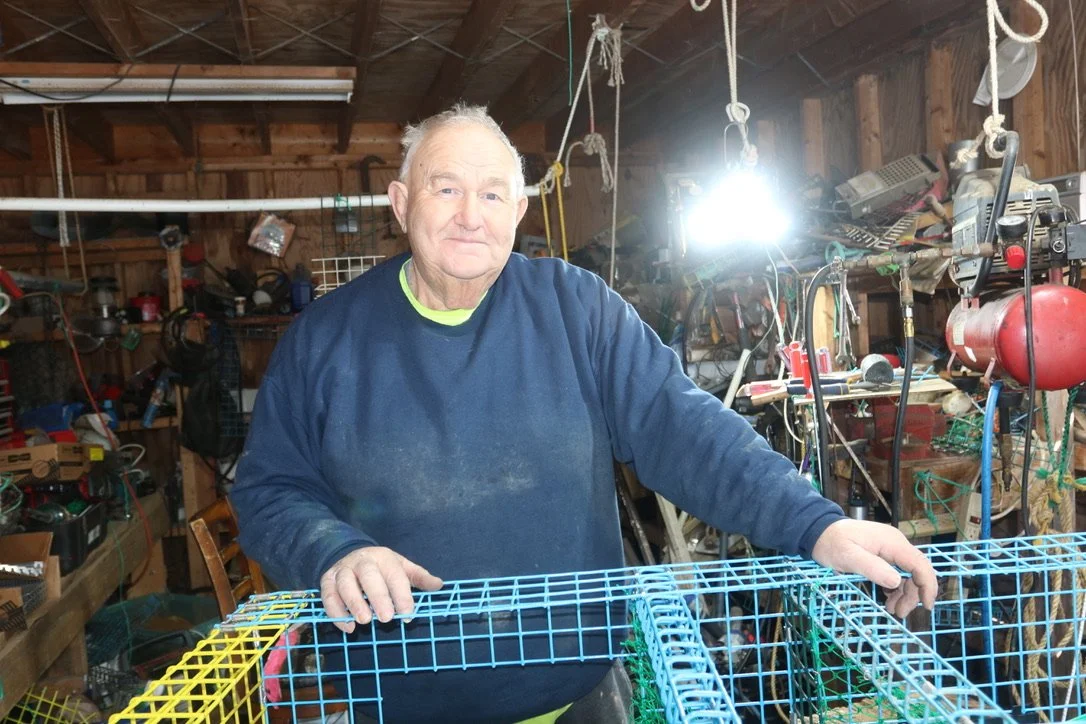
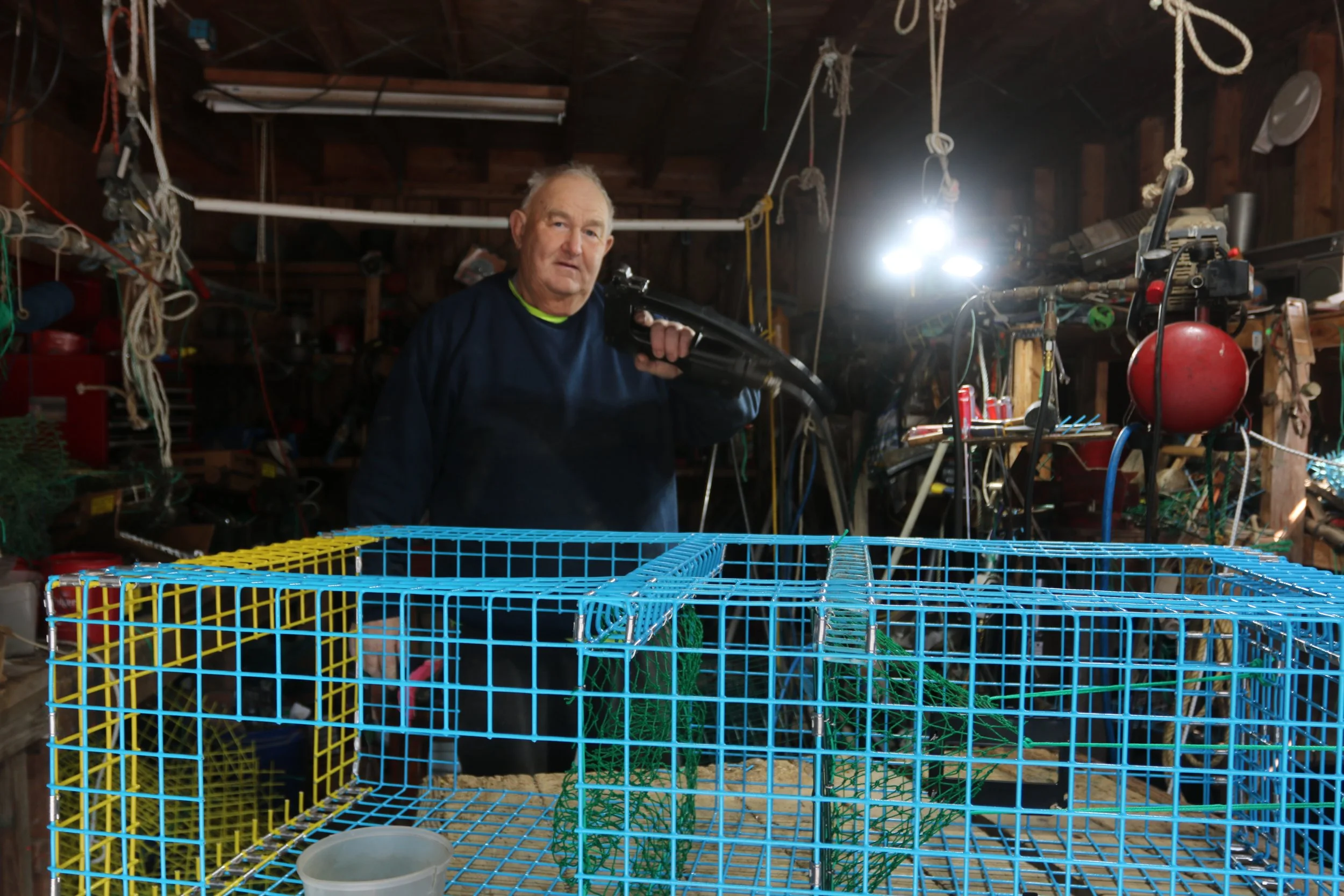
Traps in the yard are a crucial part of the lobster industry, but also part of what seems increasingly like a winter art. Nobody makes traps just the same, Keith Wallace says.
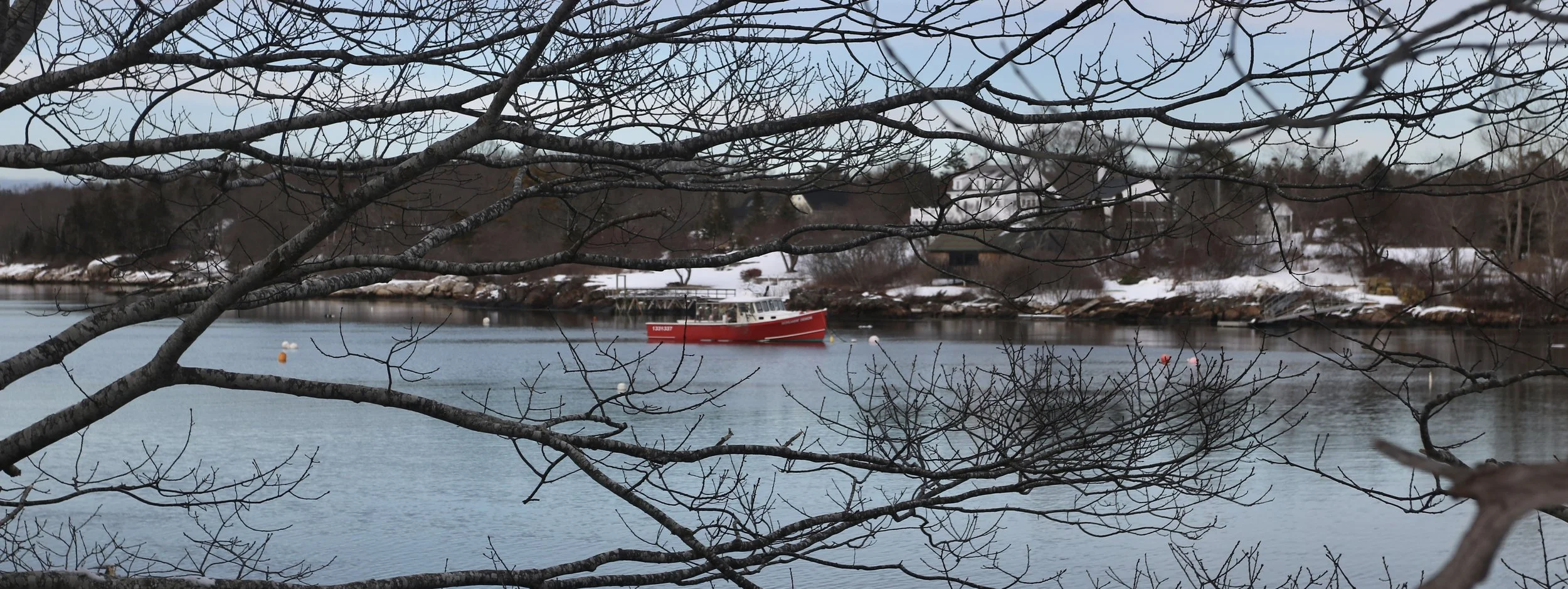
When he’s not out to traps, Keith’s boat, the Screamin’ Demon can be seen from Hermit Island.
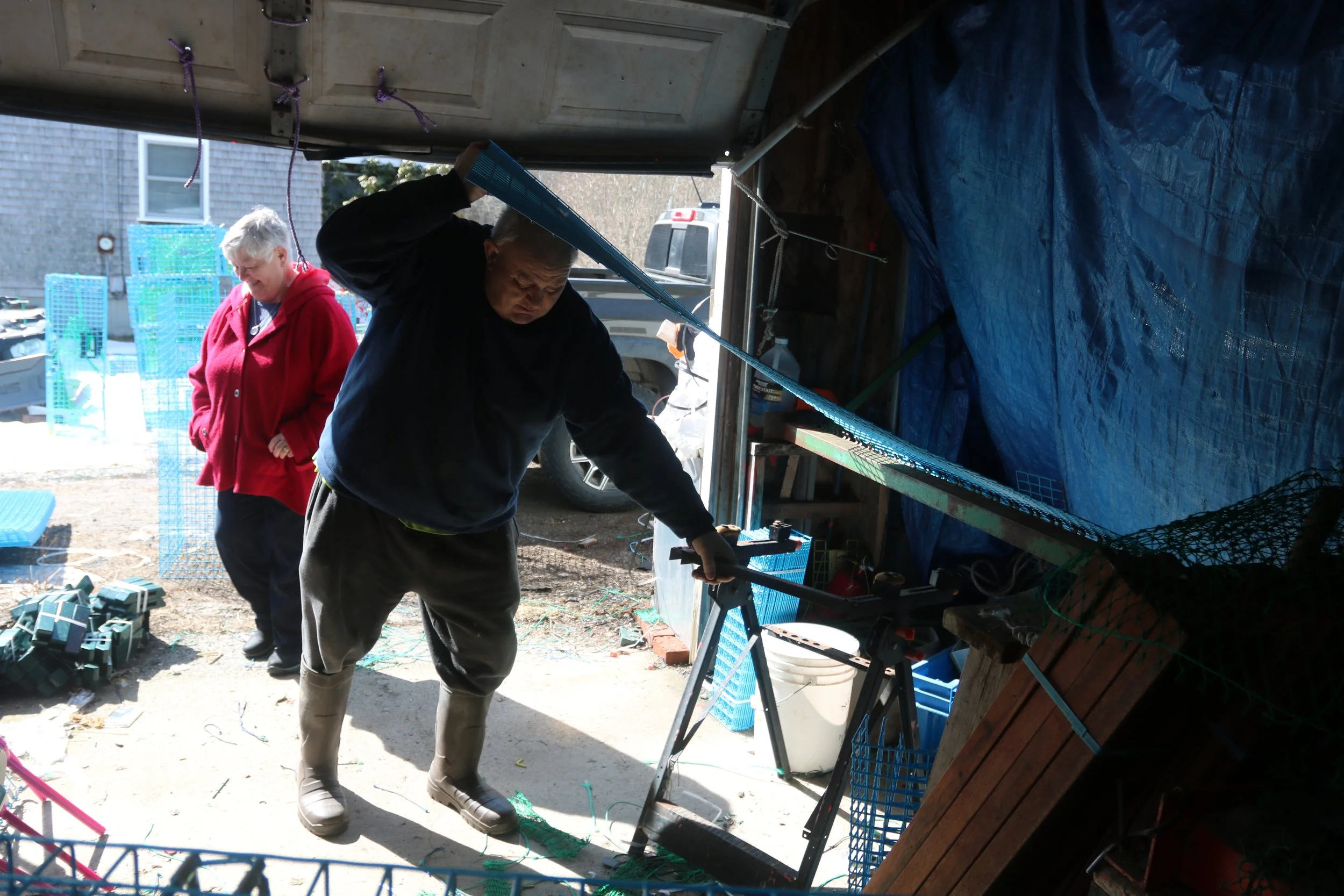
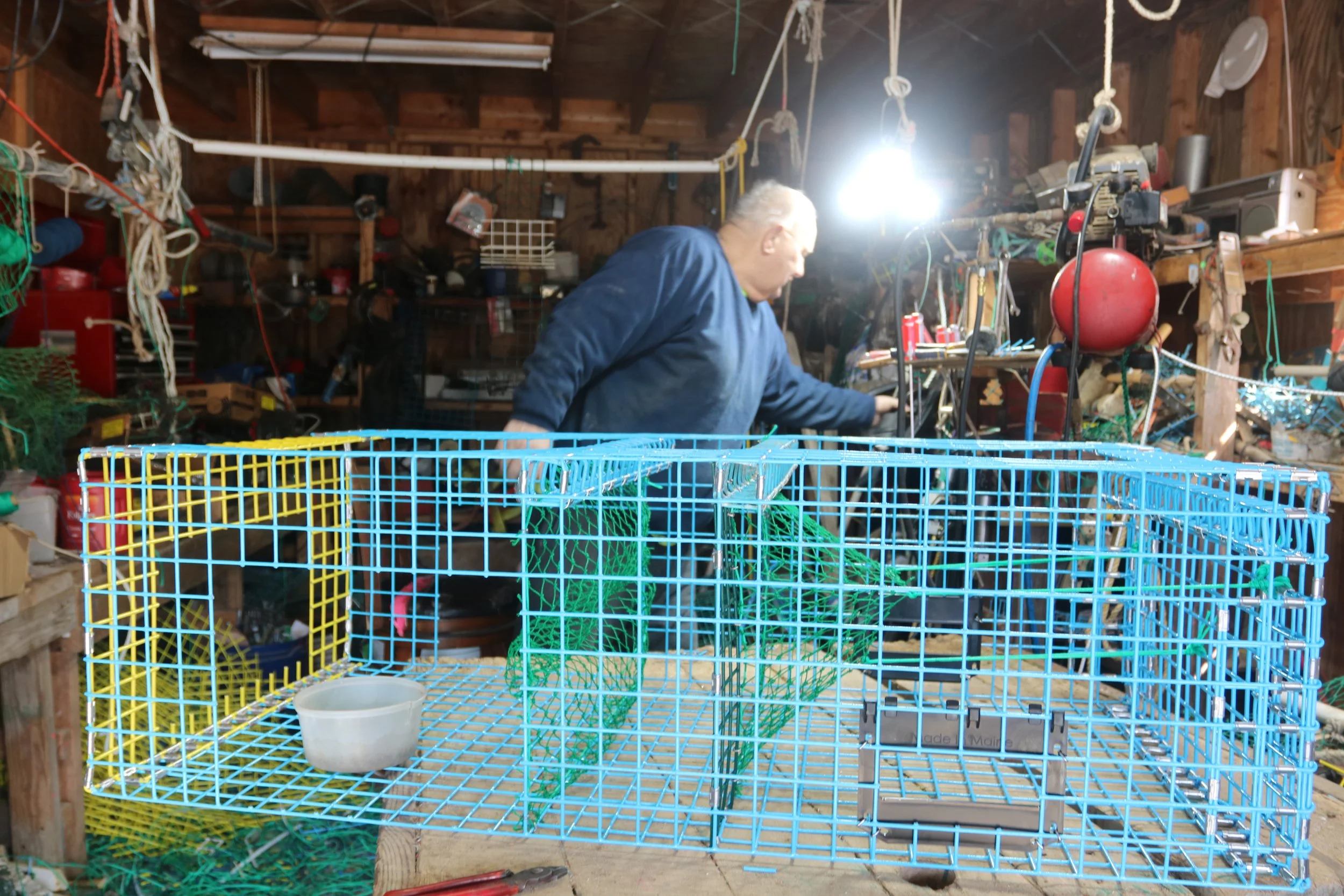
The tools of trap making have evolved with the industry. They’re simple and effective. Here, Keith places a trap side on the teeth of the wire bender. He’s counted down the wire squares to find the appropriate length. A lever at the right of the machine will help bend the wire mesh to a uniform right angle.
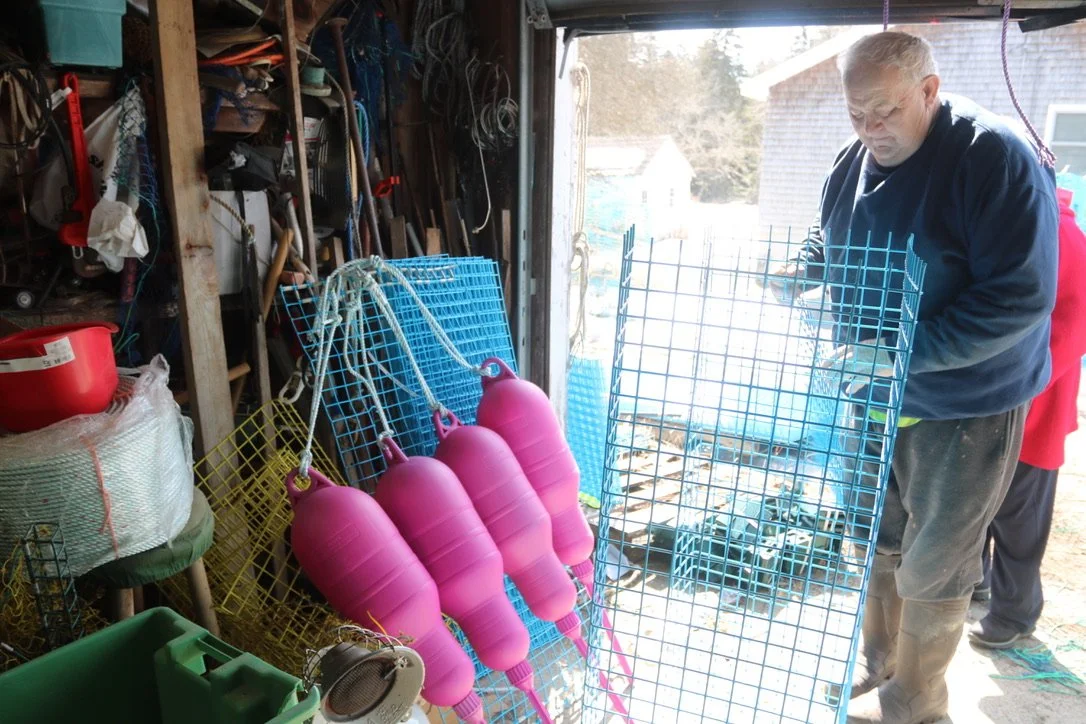
Gesturing towards the back yard where older, yet plentiful traps have been tidied away, Keith says that trap building is mostly necessary winter work – but it can also be a way to pass the time off the water.
The workshop is a labyrinth of manual tools, hydraulic lines and the systems of seasonal work. I like spaces like these. They remind me of all the bits of the world I can learn about, even hidden just inside somebody’s garage.
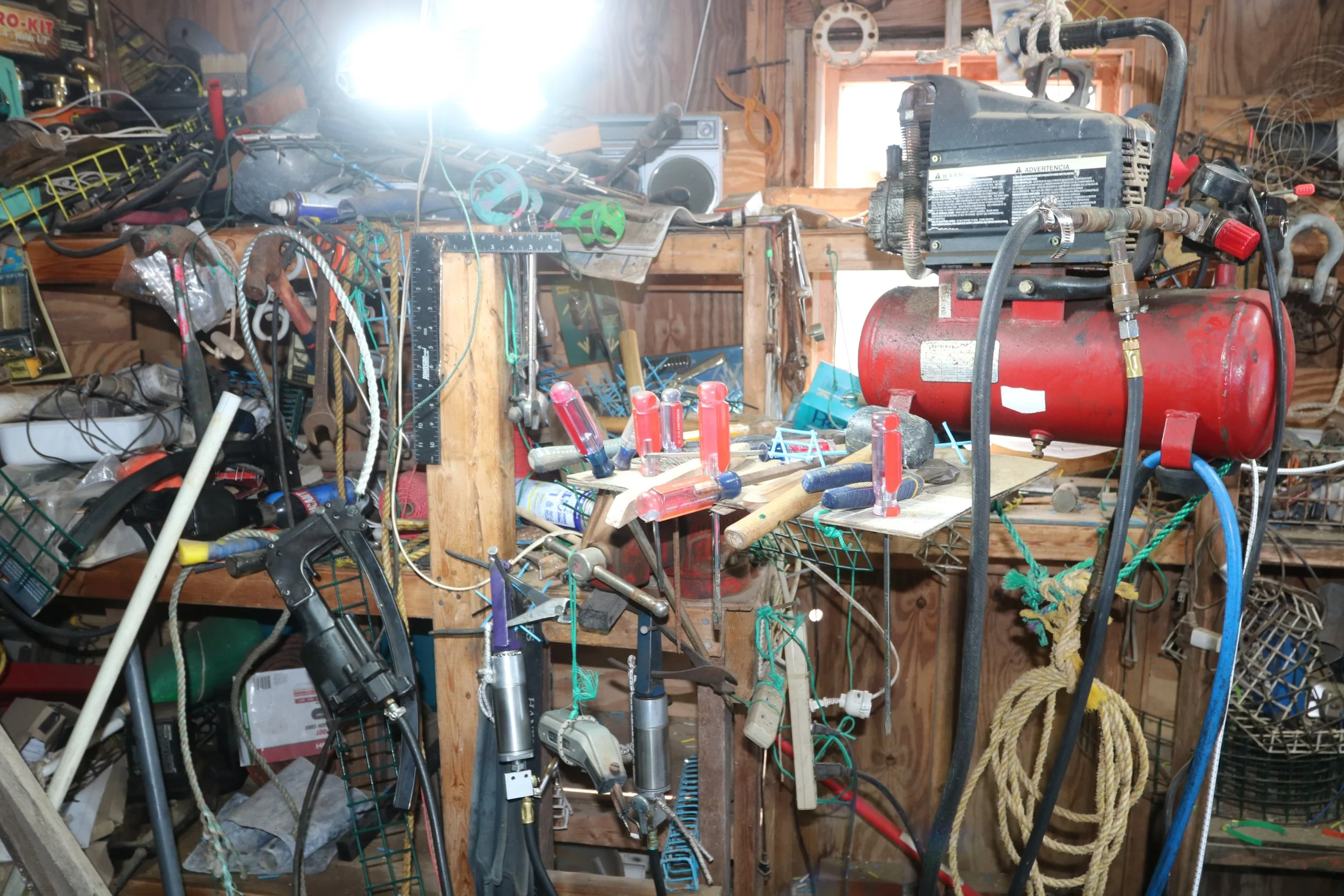
Maybe industrial compositions aren’t everyone’s cup of tea. But I think if you’re not seeing the patterned beauty in even these less visible bits of the lobster industry, you’re just not looking right. It’s there! Framing the story, the picture or the idea right can make everything into a sort of art. I like viewing the world like this. It’s not always possible, of course. But it can be more often than it seems.
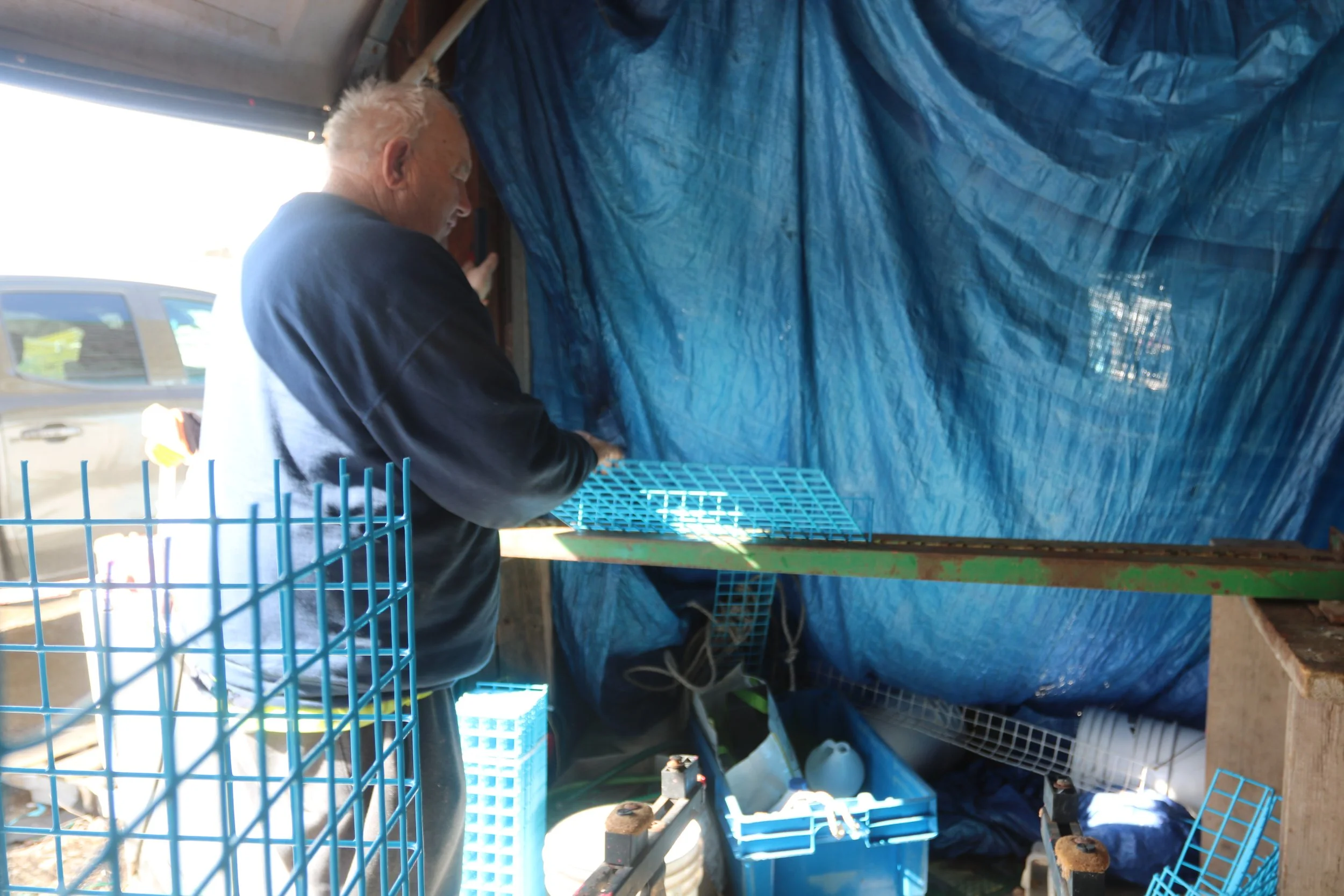
Of course, when I told Keith that I didn’t really know why I loved photographing work spaces and people at work in those spaces, he quipped right away that it likely had something to do with the fact that its always better to be the one watching the work, rather than the one working.
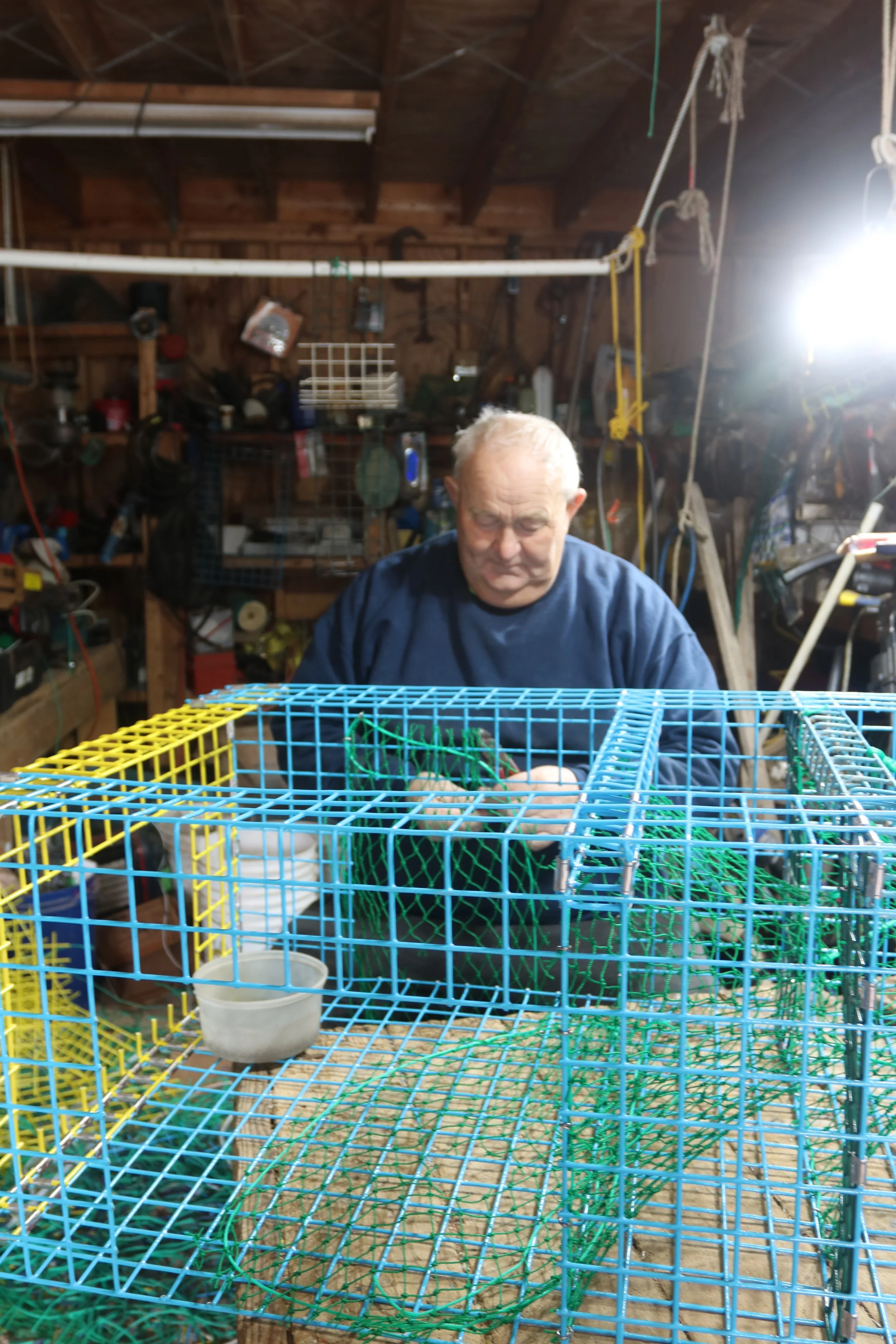
Making one trap requires a whole host of rhythmic movements and the skills associated.
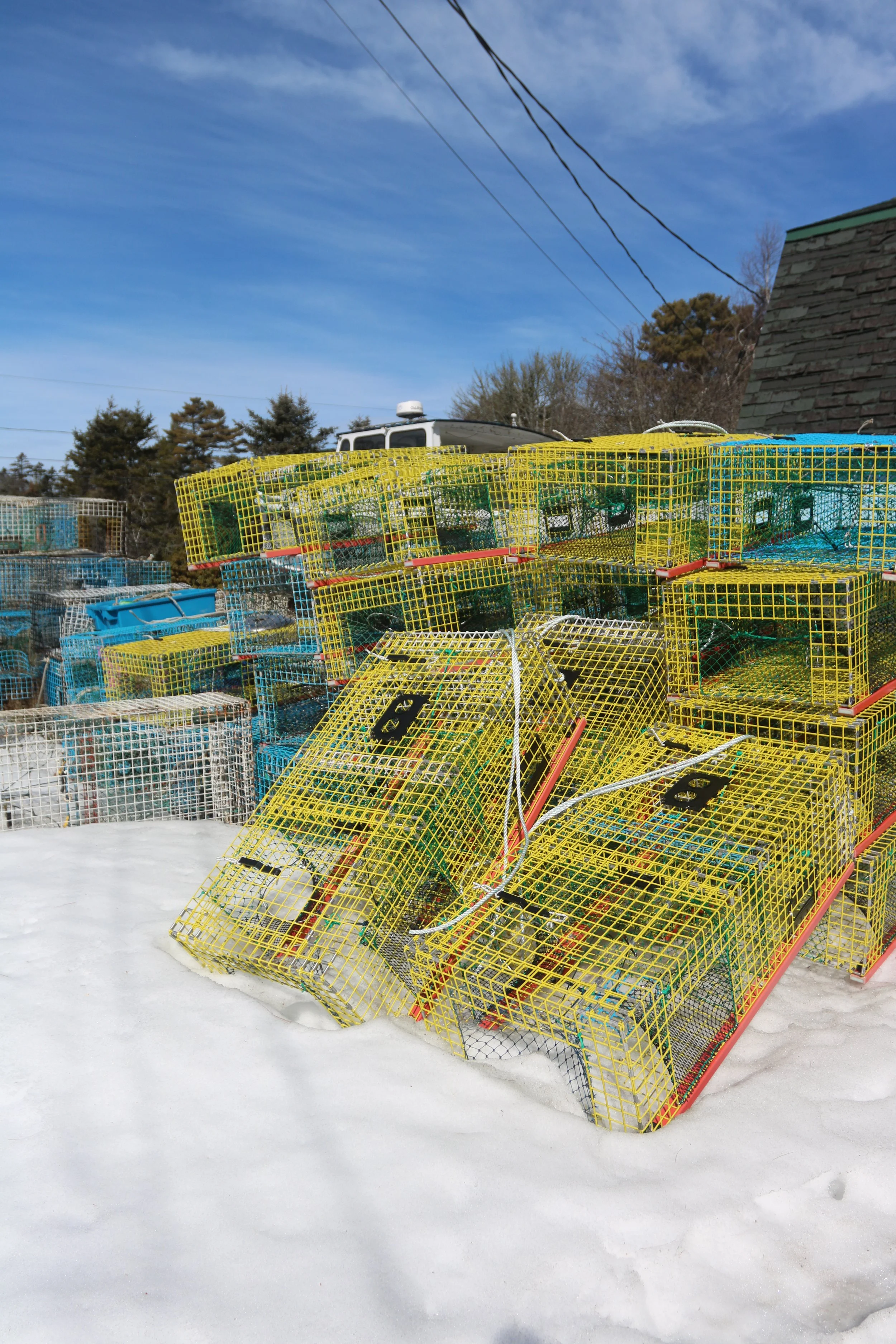
These new shiny beauties will be catching Gulf of Maine Lobster this coming season.
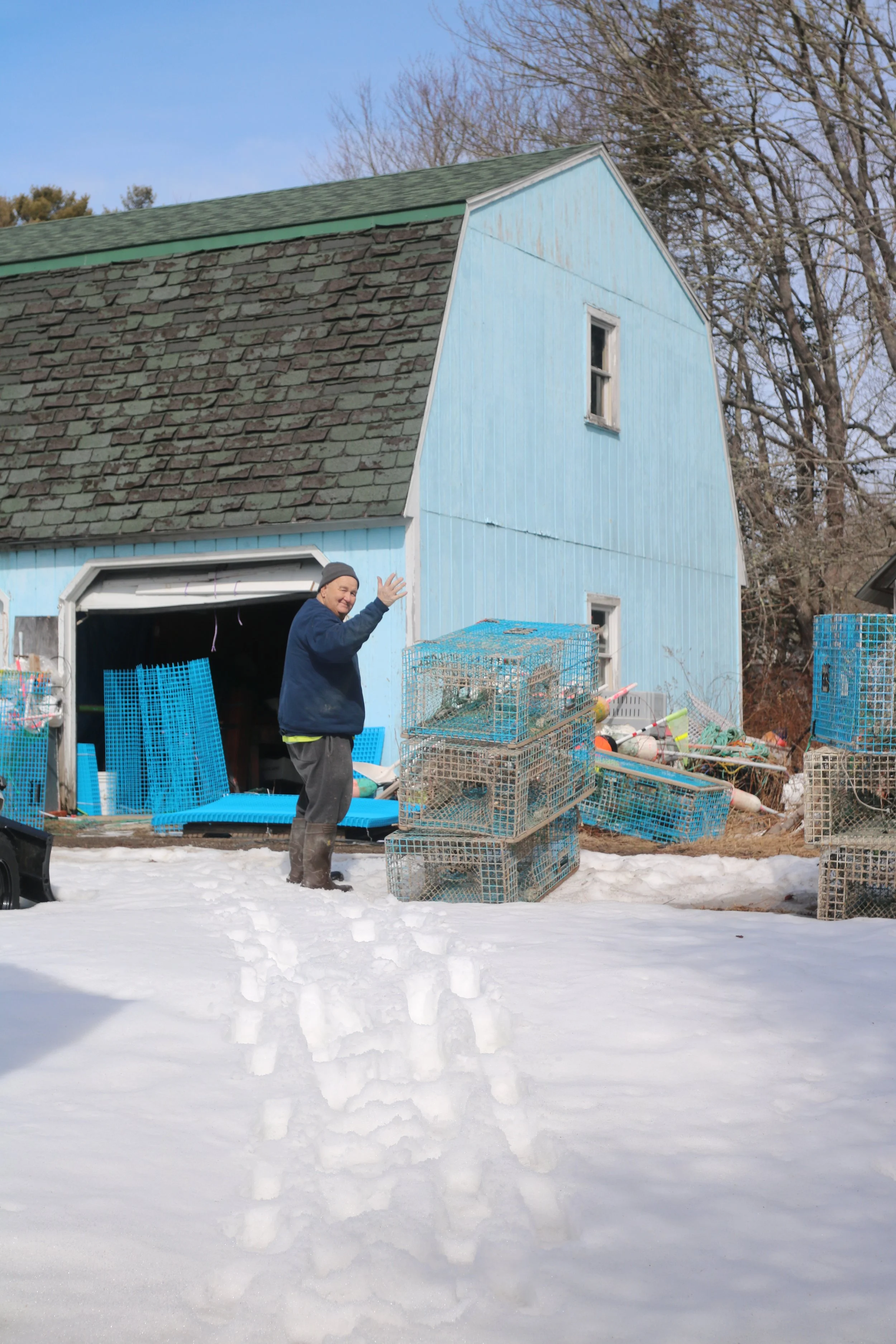
Some spring promise here.
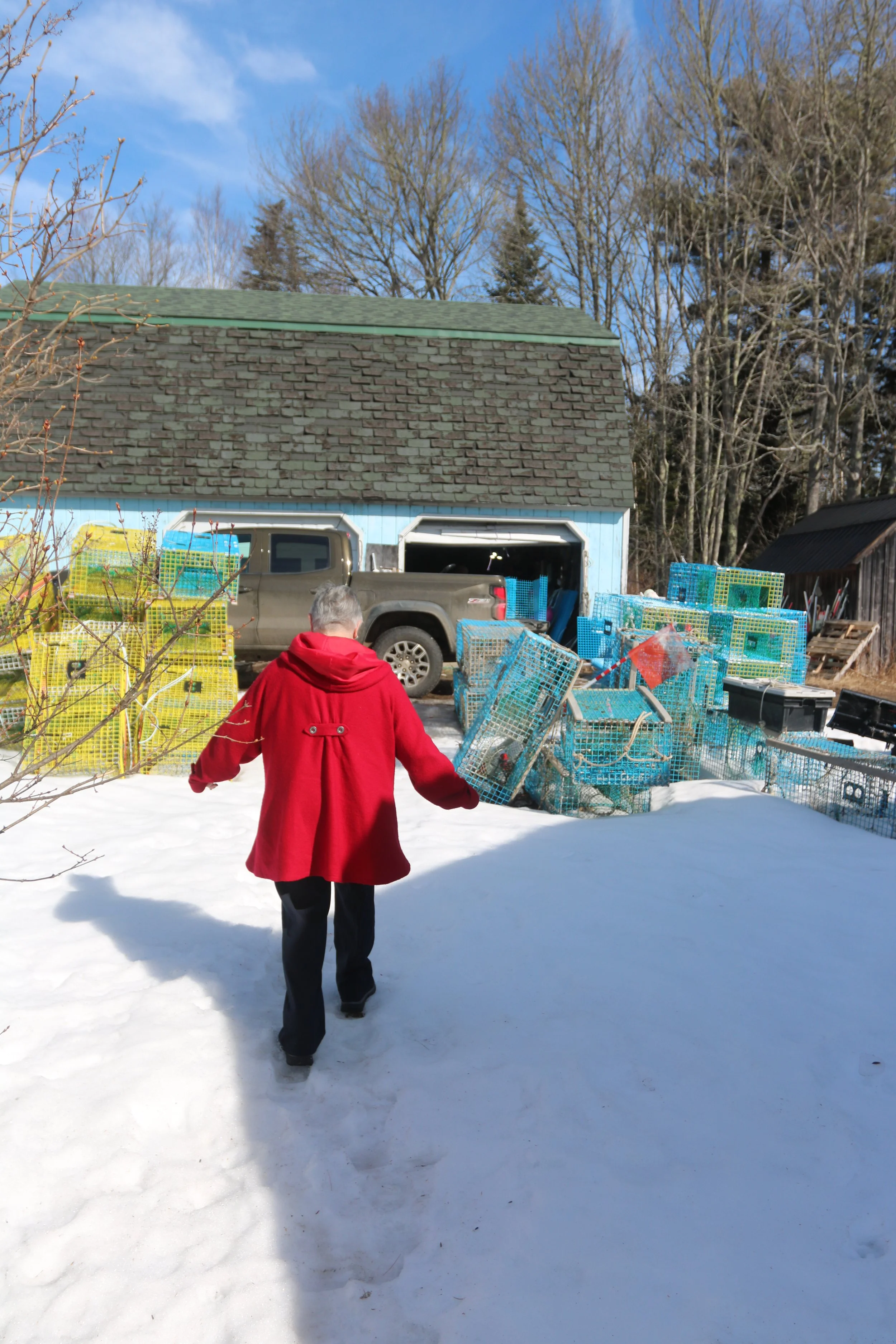
Robin Wallace makes her way over the season’s last snow.
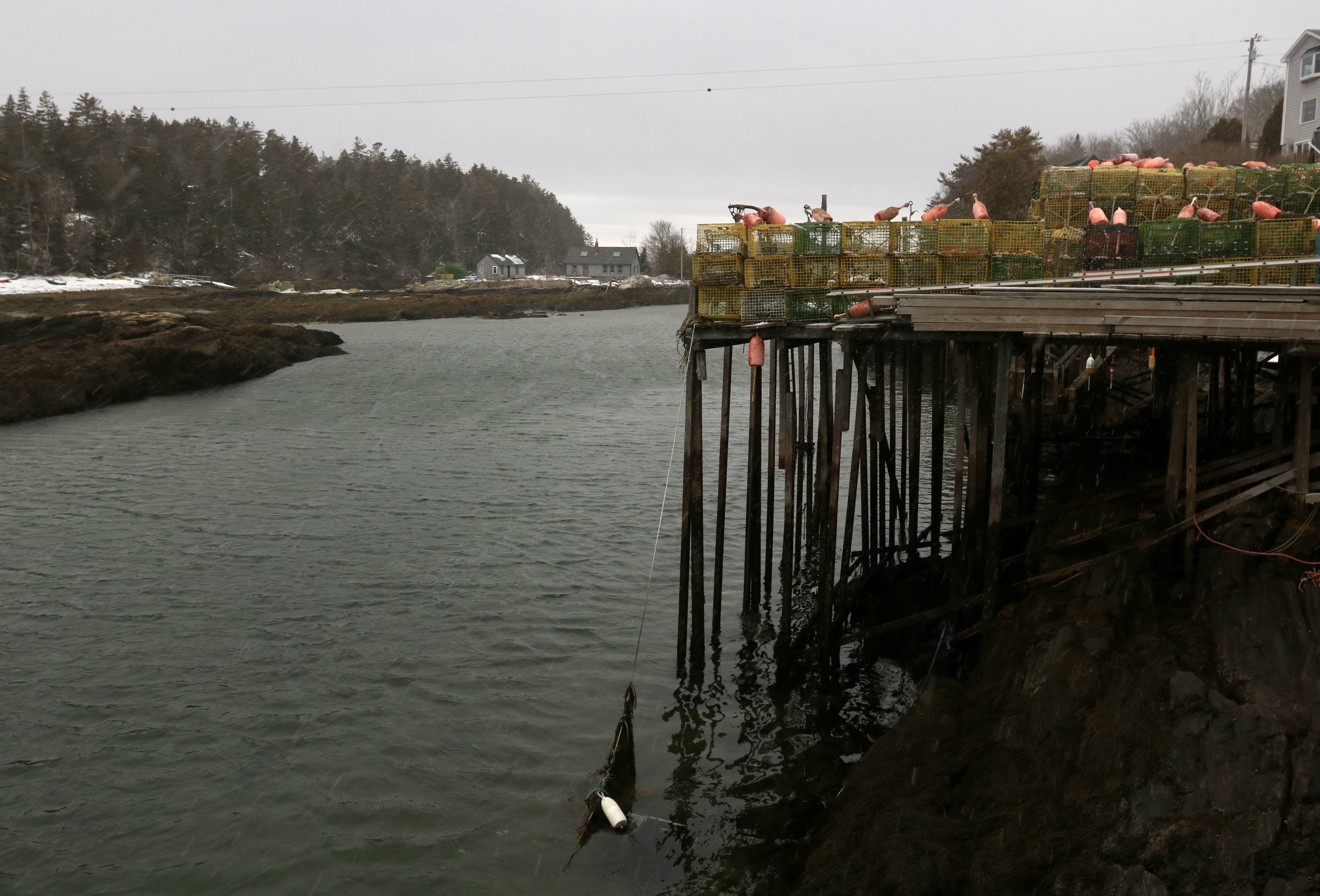
The Wallaces are deep, deep Phippsburg people. Their name marks roads, wharves, houses and legacies. Keith is an eighth generation lobsterman. That means his family has seen ecological changes, technological developments, regulatory shifts and social cycles all from the vantage of this rocky coast. Most places in Phippsburg are like the one pictured here: If you look a little longer and start letting your curiosity get the best of you, you’ll begin to see all the layers of oceanic history piled up here on this little, but dynamic peninsula.