Tangled Industries: 3
Here is the final part of this lengthier, mid-winter blog. (Here are links to part 1 and part 2.) In it, I’ll finally get back to this little peninsula, ruminating on its place in North Atlantic history. First, though, let’s look at a country whose residents, like those of the US, are dependent on healthy waters.
Part 3
MOROCCO IS A coastal nation. Bordering both the Mediterranean Sea and the Atlantic Ocean, many of Morocco’s macro and micro economies depend on healthy seas – like ours.
In the autumn of 2025, Morocco became the 60th nation to ratify what is known as the High Seas Treaty. And on January 17,2026, the High Seas Treaty became law(-ish). In light of this action, what some conservationists have described as “the greatest conservation effort in history,” I’ve been thinking about the bordered and borderless nature of water and history.
So, first off, what are the high seas?
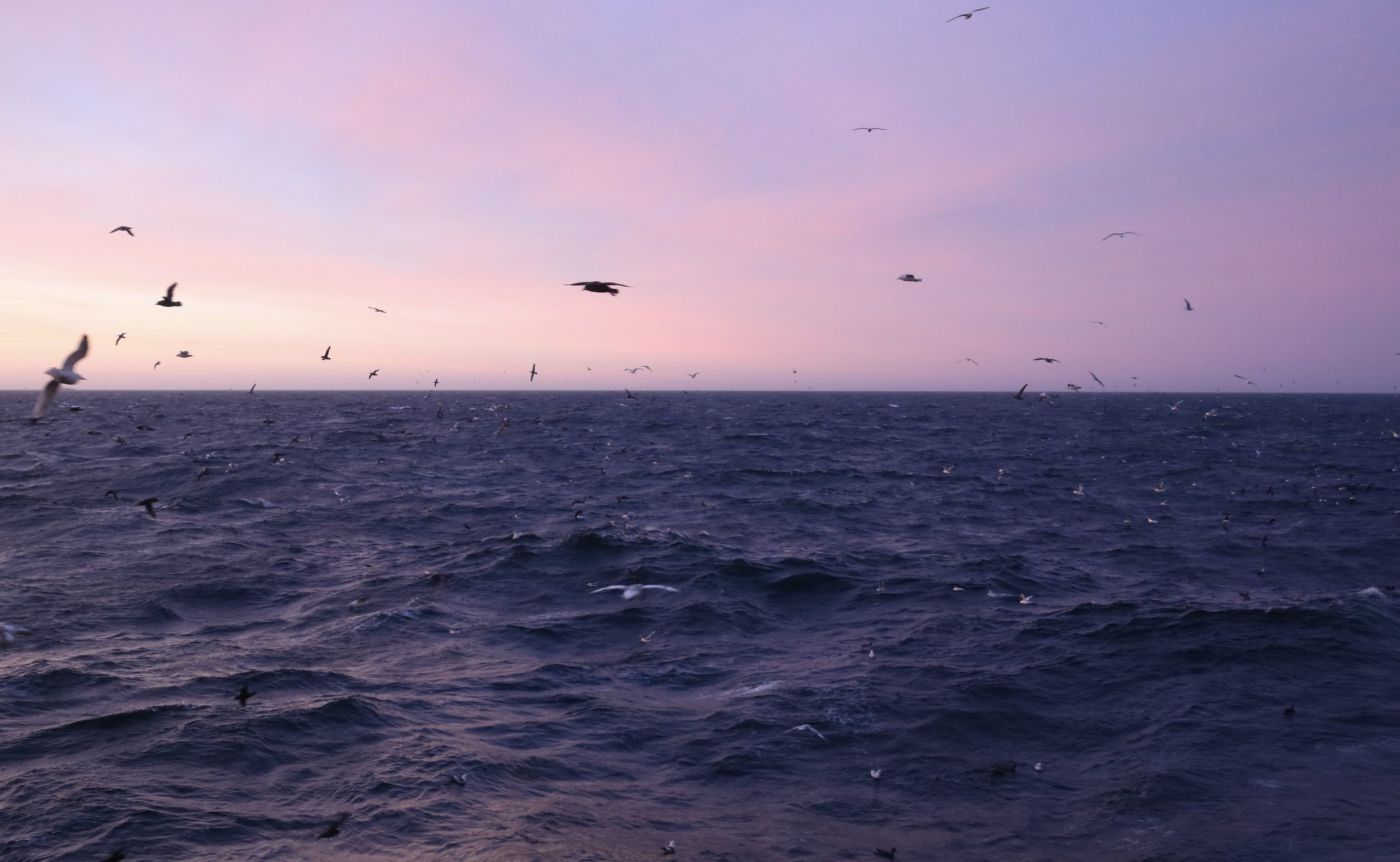
Gulf of Alaska, 2020. Warm summer. (Not technically the high seas.)
LIKE THE INTERNAL workings of a human body, the surface of this extraordinary globe is mostly water. Some of that is bound up in ice. Some water runs in rivers and waterfalls or shifts from pine forests into fogbanks and rainstorms. Some flows through subterranean lakes, seeping into our Midcoast wells. A little bit stagnates in sidewalk puddles. Most of it, however, sloshes around in the collective body of salt water, known as the World Ocean, covering just about 70 percent of the planet.
But the “high seas” are less defined by geography than they are by maritime law. They are the shifting expanses of oceanic space not currently part of a territorial sea or the internal waters of a state. They are unfathomably vast. Within and above this liquid space live, spawn, and evolve the majority of known (and unknown) life on Planet Earth. Our near-shore habitats, including the ones we are familiar with here in Phippsburg, are enmeshed in this broader reach of water – the health of our fisheries is inextricably linked to the health of the high seas.
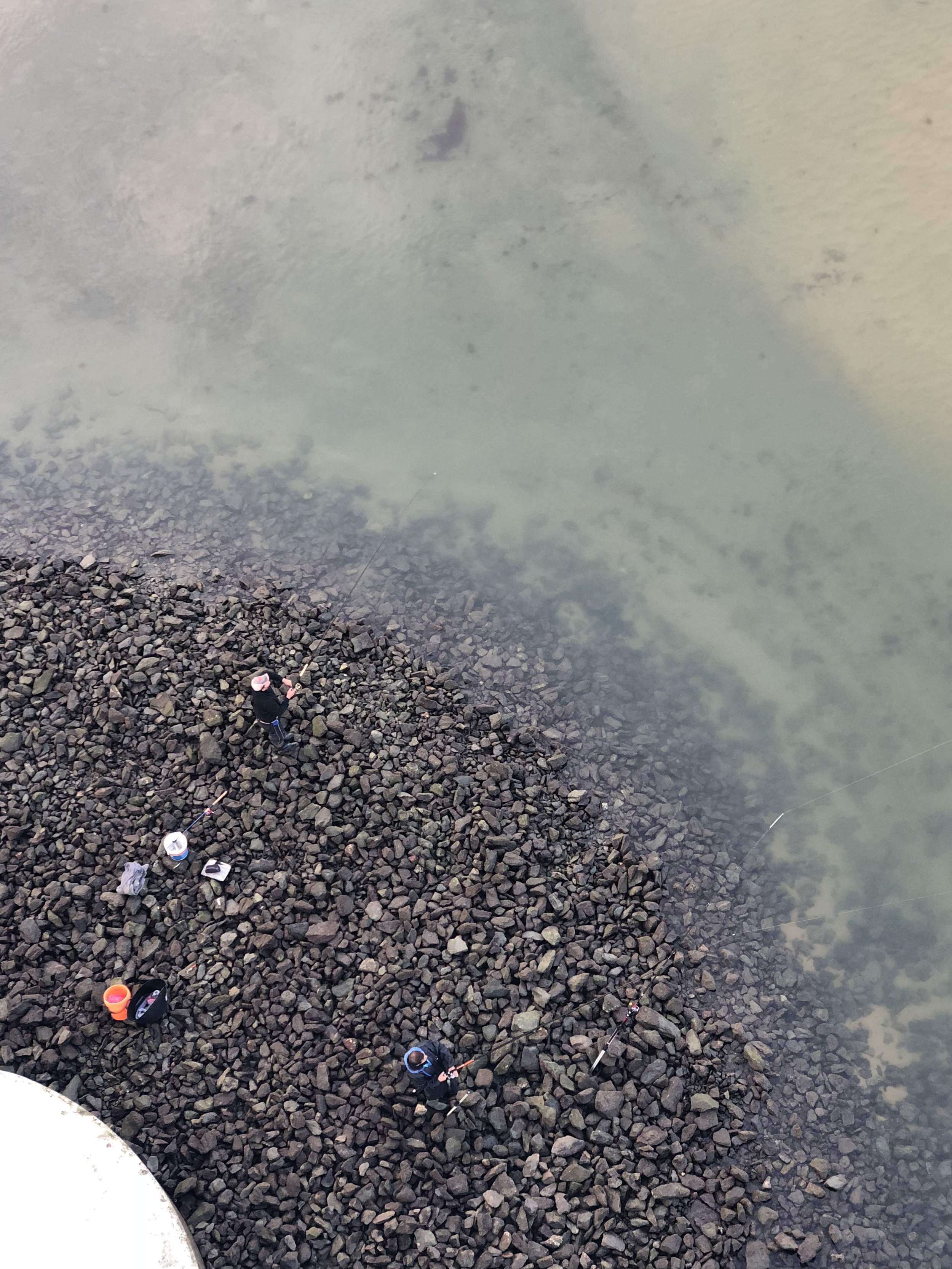
Portuguese anglers. From a bridge in Longuiera/Almograve.
The High Seas Treaty is a legally binding instrument, an agreement under the United Nations Convention on the Law of the Sea. It creates parameters to protect 30 percent of the high seas.
THE TREATY, OVER a decade in the making, recognizes that the ecological resources of this globe form one, common ecosystem. One nation’s or company’s simple capacity to dominate resource extraction, causing ecological and economic catastrophe to others, should not mean that they are allowed to. The High Seas Treaty asserts that might does not make right.
Though this may feel far afield, way over the visible horizon from Phippsburg’s glacier-scraped shores, and beyond the scope of our governance, it’s a big deal for our more local future, both materially and conceptually.
But the treaty, like any new law, requires enforcement. This brings me back to the interesting entanglement of military presence and the natural resources of marine spaces.
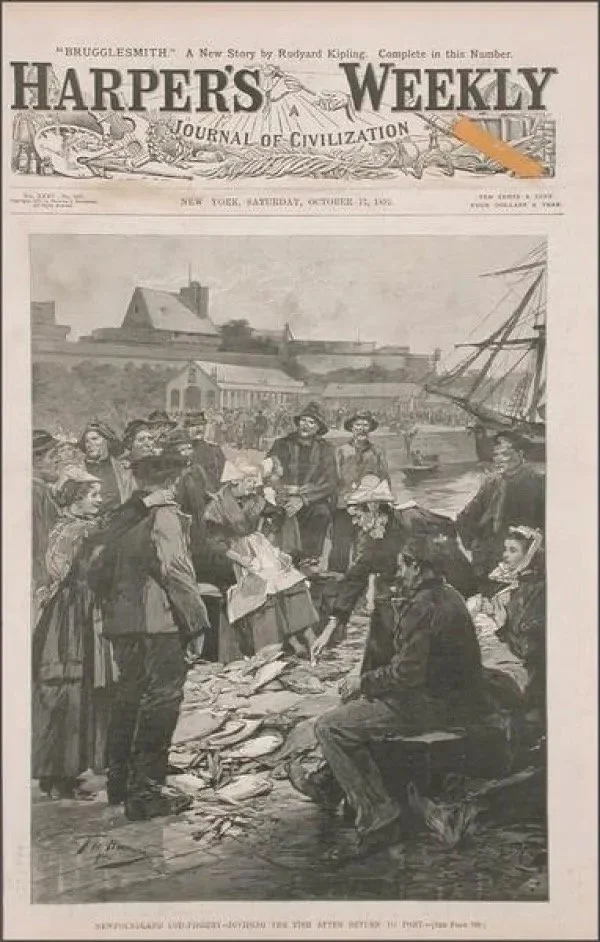
Newfoundland Cod Fishery—Dividing The Fish After Return To Port
(Memorial University of Newfoundland and Labrador Permanent Collection)
WE TALK ABOUT Phippsburg as a fishing town, a retirement or tourism town, and a good place to live a whole life in. It’s also been a military town. Fort Popham squats at the mouth of the Kennebec. On the forested ridge of Sabino Head, Fort Baldwin’s dark tunnels drip in thaw seasons. Patient tree roots crack the Panama mounts, decomposing to eventual sand and gravel those circular cement and metal rails.
And, as evidenced in the old cod fishery, European colonization of this continent was, in part, a defensive tactic in the race of empires to outpace each other. Water and war are pretty well married.
UP THE KENNEBEC River from Phippsburg, Bath Iron Works employs 7,000 people, including Phippsburgers, and makes a lot of the US Navy’s warships. This is a fundamental piece of the midcoast economy. The warships have deep drafts. To ensure their safe passage to sea, BIW contracts dredging companies to keep shallower bits of the Kennebec’s bottom relatively clear.
This is an active example of the overlap of marine resource management and global force. In fact, as I write this, on February 17, BIW is scheduled to begin dredging for six weeks, part of a quarterly maintenance regimen to deepen the federal navigation channel, which runs down the river, past Fort Popham, and out to sea.
Over the last decade and a half or so, Phippsburg residents, clam diggers, lobstermen, and local land trusts have pushed back, asking that BIW consider alternative methods of keeping the river clear. Dredging can impact fisheries, clog mudflats, destroy lobster gear, and foul conserved intertidal zones. But watery spaces have a history of being tricky to manage. Where are the boundary lines? How does shifting water move? Does one’s activity upriver necessarily impact those living and working downriver? And if so, who is responsible?
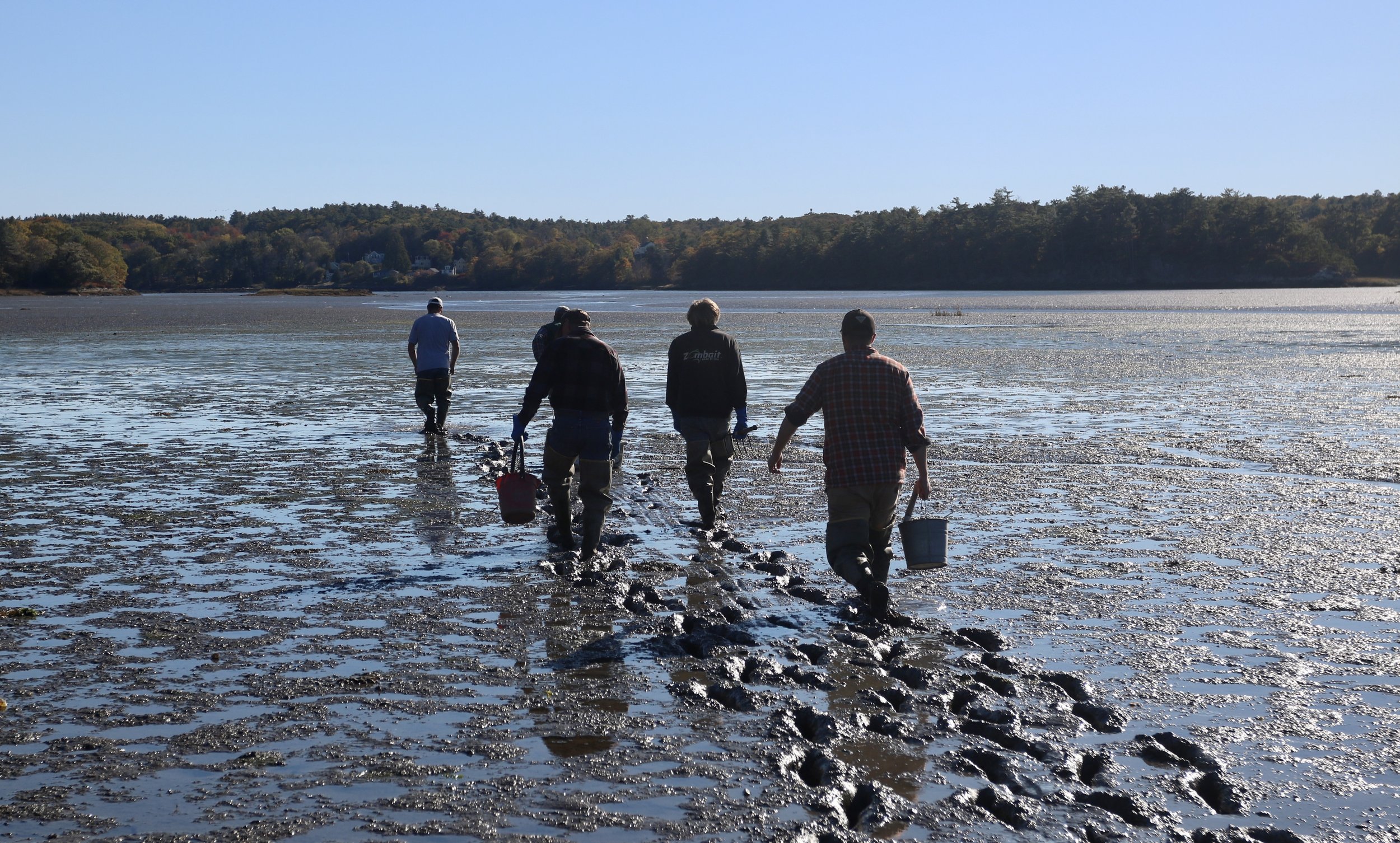
To ensure the longterm protection of the resource, Phippsburg clam diggers collectively put in thousands of conservation hours over recent years. Here, in collaboration with Manomet Conservation Sciences, a group of clam diggers carries quahog seed out to test its viability.
PHIPPSBURG’s ATKINS BAY bottoms out at low tide, revealing a mudflat 1.5-miles long and half a mile wide. This is an important ecosystem for Phippsburg’s clam diggers.
Sedimentation, or blanketing deposits of fine detrital material, can be caused by rain storms, big thaws, or industrial activity–all of these phenomena have the potential to stir up fine particulate matter into a river’s strong currents.
Clam digger oyster farmer Terry Watson texted me last fall. A heavy blanket of silt had covered the flats so deeply that Terry and other diggers couldn’t see the clams’ breathing holes for days. Impacted their livelihood, and the health of the ecosystem.
When I started asking around, I understood pretty soon this sort of sudden sedimentation wasn’t just a Phippsburg problem. Across the Kennebec, Georgetown clam diggers rely on Sagadahoc Bay for much of their harvest. Georgetown’s Shellfish Commission Chair Chad Caldwell confirmed that though there wasn’t much empirical research to support his observations, it seems that the flats are smothered most commonly just after he sees the dredging vessels in action.
(A lack of research, I should note, does not indicate a lack of impact. Local marine scientists and coastal advocates have noted that mudflats, though crucial coastline, are historically under-researched and underfunded.)
But of course, folks know that, as Campbell noted, “Those destroyers [from BIW] have to go out the river one way or another.”
I FIRST REACHED out to Richard Lee because of this dredging conundrum. I wanted to talk to folks who remembered a specific dredging event back in 2011, one that caused a lot of local outcry and pushback. Some of you probably remember this. The USS Spruance was scheduled to depart for the high seas on September 1, 2011. But the Kennebec River bottom was found to be shoaled, requiring a massive overdredge. Though a local collective of fisheries, residents, and conservation stakeholders appealed the DEP’s permit, in August of 2011, 70,000 cubic feet of benthic sand were scraped up and dumped downriver.
Richard witnessed some of the fallout from that big dredging event. He and his son were out fishing from kayaks behind Three Herons. They noticed a lot of sturgeon jumping – a potential sign of distress. Then his son pointed to a vast, brickish cloud in the water. It looked like a red tide had swept in, Richard said. This was no algal bloom however, but the resuspended sediment of the river bottom. Later, walking Seawall Beach, they found several dead shortnose sturgeon on the beach, some schooly bass, and one big bass.
This is, of course, a complex problem. If the USS Spruance couldn’t get to sea on the scheduled September 1st date, it would impact the largest single-site employer in Maine, and, according to the 2011 court decision, a delay in the launch date would “have a cascading impact on naval operations around the globe.”
The harvesters and other stakeholders I talk with echo this understanding–but also ask: In an era of increasing ecological instability, how do we balance needs and actions against downriver harm?
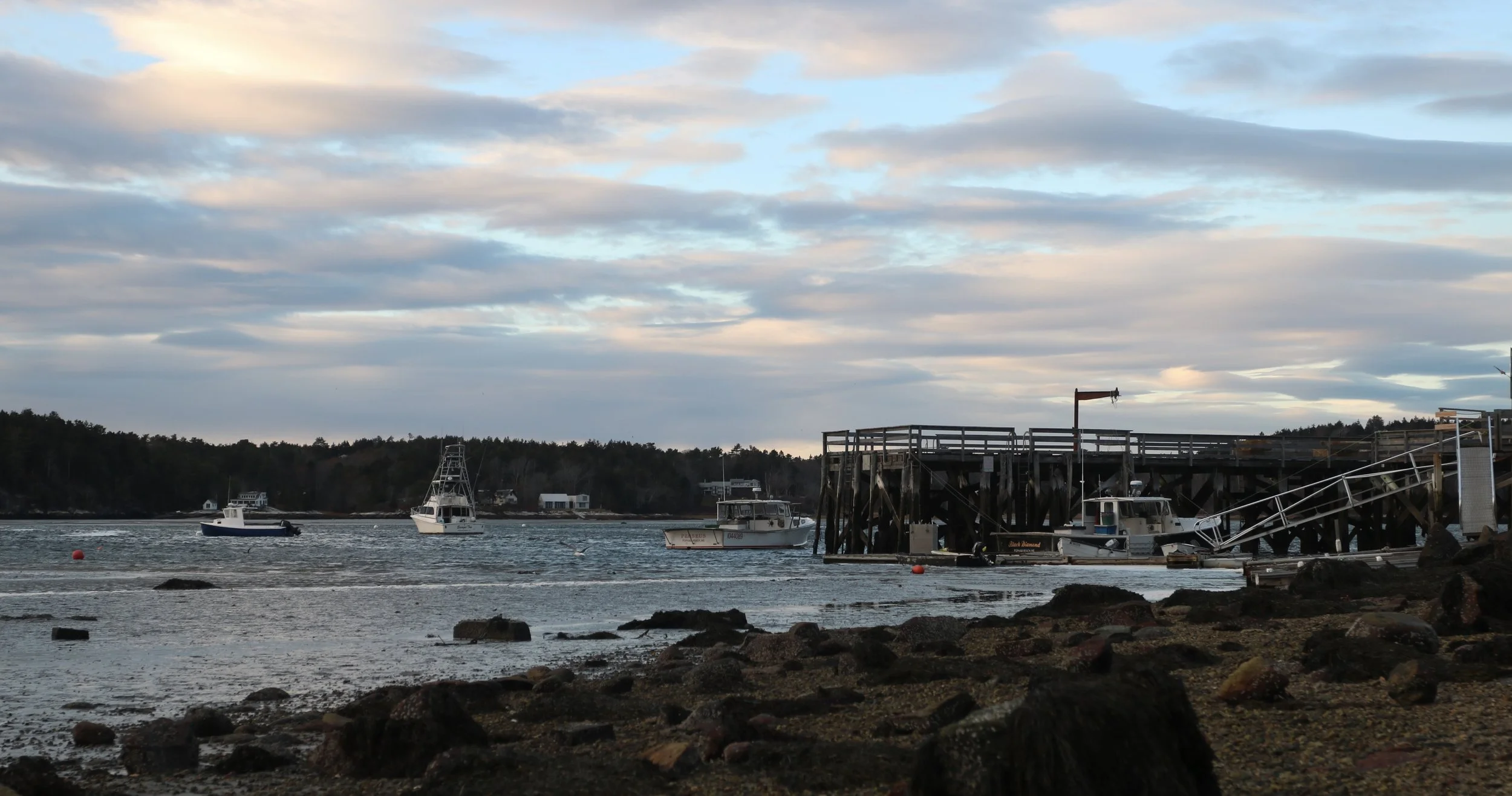
Popham Wharf at low tide.
THOUGH I GREW up kayaking on the Kennebec, the only dead sturgeon I’ve seen up close was in the factory of a big bottom-trawler in the Gulf of Alaska. The codend, scraping along the seafloor, targeting yellowfin sole, caught the white sturgeon once, and hauled it up with some 30 metric tons of flatfish and bycatch. Somehow, the sturgeon was still alive as it passed through the factory. We released it, hoping it would live, knowing it wouldn’t.
When we caught it again, scooping our own waste up on the next haul, it was dead. That was a white sturgeon, beautiful, prehistoric, its pale-scaled sides patterned with faint constellations.
Quite often, those bottom draggers peeled up the ancient mud of the seafloor. You could see the milky cloud of sediment when the codend was still far off from the boat. Sometimes a huge lump of mud or a boulder would roll out of a 30-metric ton bag onto the deck. I find it hard to imagine anything else impacting the sea floor like this–save meteor strike, earthquake, volcanic eruption–all of which are infrequent phenomena, unlike the incessant scraping of our big machines.
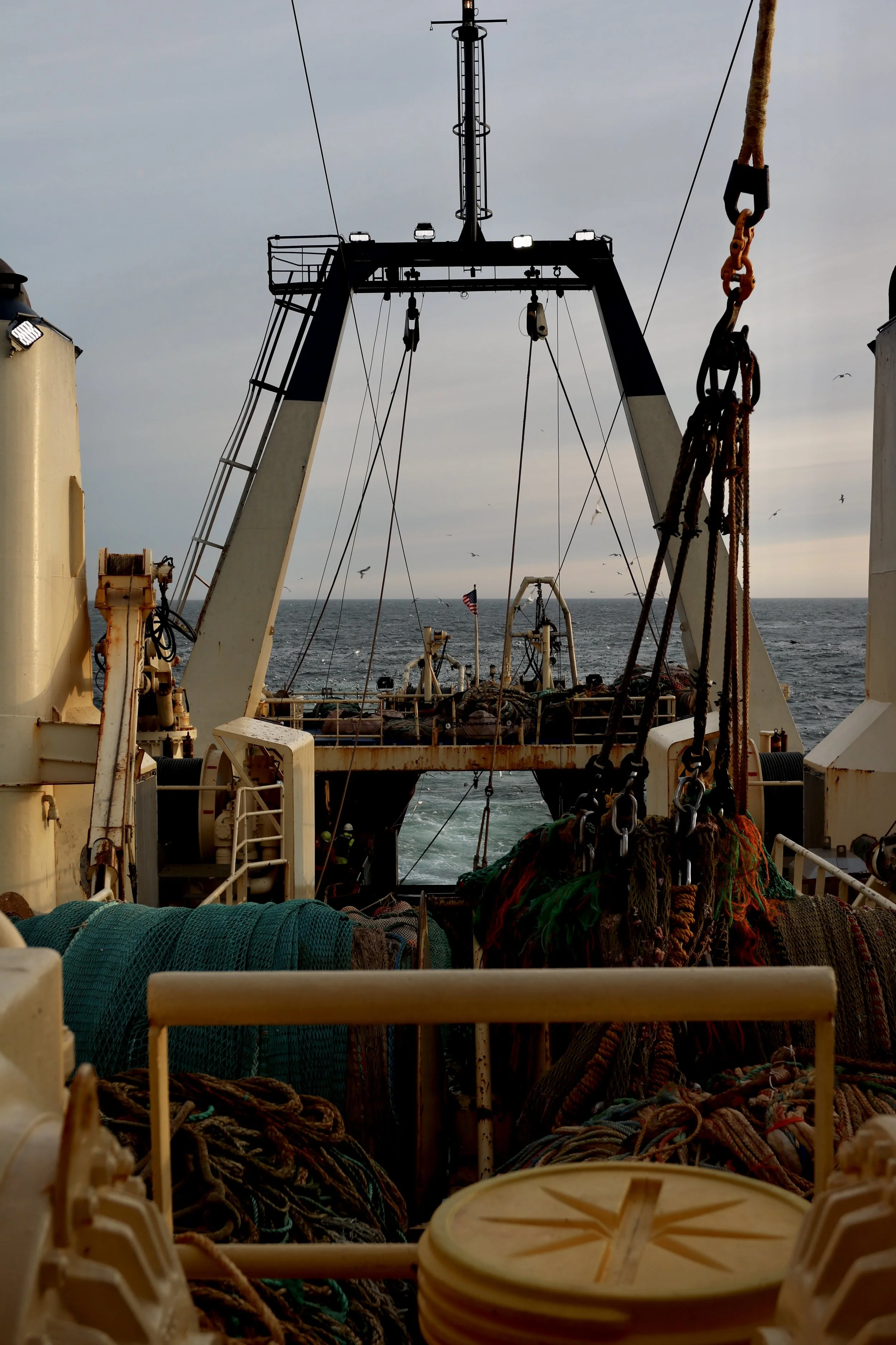
This is the stern deck of a pelagic, or midwater, trawler. This means that the net likely won’t scrape bottom, like the one that caught the sturgeon. (The hard drive that has most of the benthic (bottom) trawler photographs got drowned by a cat this summer…) This confusion of webbing, chain, net and net reels is in fact a well-organized system. As much as I decry offshore trawling, I do respect the profound skill it takes to operate a fishing vessel of this–or really, any–kind.
AFTER RICHARD LEE and I talked a bit about dredging, he told me that story, which I recounted in Part 1 of this month’s blog. The one about the submarine mine.
The Phippsburg area didn’t see much military action in World War II. But that didn’t stop the Navy from militarizing the seafloor. Anti-submarine nets and explosives can still be found occasionally, forgotten booby-traps in the benthos. Other fishermen in town have also described dredging up remnants of old armaments. I’ve heard rumors of a sunk submarine off Bald Head.
DURING WORLD WAR II, North Atlantic cod fish, which had been increasingly decimated by the last 500 years of global trade and the unsustainable extraction inherent to commodification, had a little respite. The world over, in fact, many fish populations rested.
After World War II, however, fishing changed. Suddenly, sailors were coming home, looking for work, vessels were available to fish, and the new naval technology spilled over into the fishing industry. Sonar and echosounders – these ways to see the benthic topography and schooling fish down there, became commonplace on fishing vessels.
Of course, as it goes, the first vessels to acquire these pricey things were the ones with the capital to back it. So, big offshore trawlers got better at scooping fish. This decreased the amount of fish that smaller, near shore fishermen could catch and reduced the market price across the board. Everyone needed to fish harder, increasingly over-extending the capacity of marine ecosystems. Nothing could support the homogenizing harvest of big capital. Just like in Newfoundland’s 18th and 19th centuries, the self-employed fishermen of the 20th and 21st centuries were – and are – just trying to keep up.
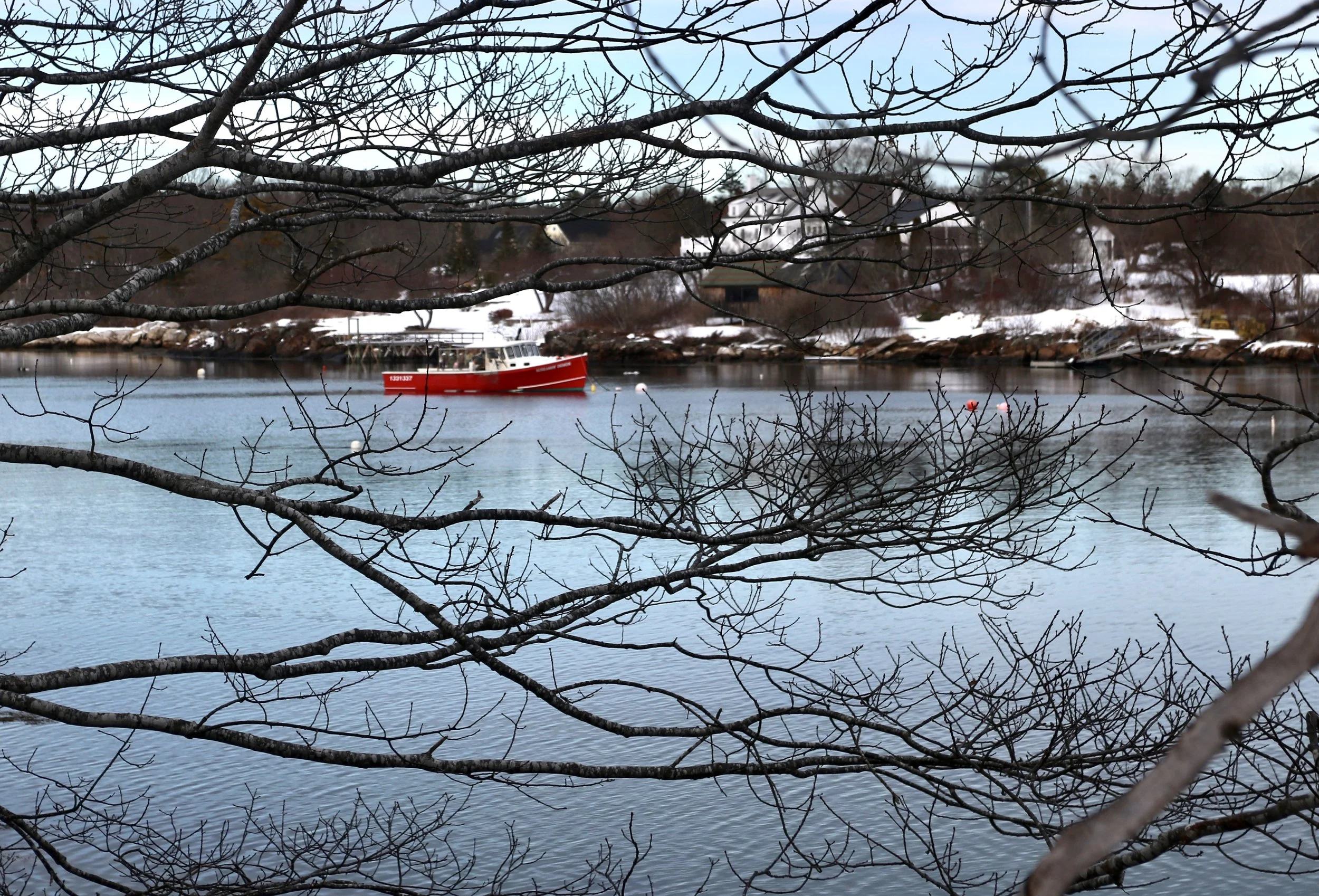
Keith Wallace’s boat.
THOUGH WE CELEBRATE efficiency, I’ve begun to think about this word, ‘efficiency,’ when it's applied to a harvest, more in the framing that Dean Bavington offers in his book Managed Annihilation.
The commodification of marine resources requires linear models. This juts against the reality of those organic resources, which are inherently in flux through spawning seasons and years, shaped by nutrient abundances and depletions.
This paradox can only be solved by increasing the rate of extraction, in an effort to smooth over the naturally occurring gaps in the harvest. Basically, to make big investments in natural resources work, we have to pretend that the ecological world can be made predictable – we have to get ever more “efficient.”
Local fishermen, like many of those in Phippsburg, who depend on more diverse, smaller harvests know the ecological reality. They are ready to shift, to let the marine web lie fallow, just as one would let an agricultural field rebound, as opposed to simply digging wider and deeper–or selling a less healthy product.
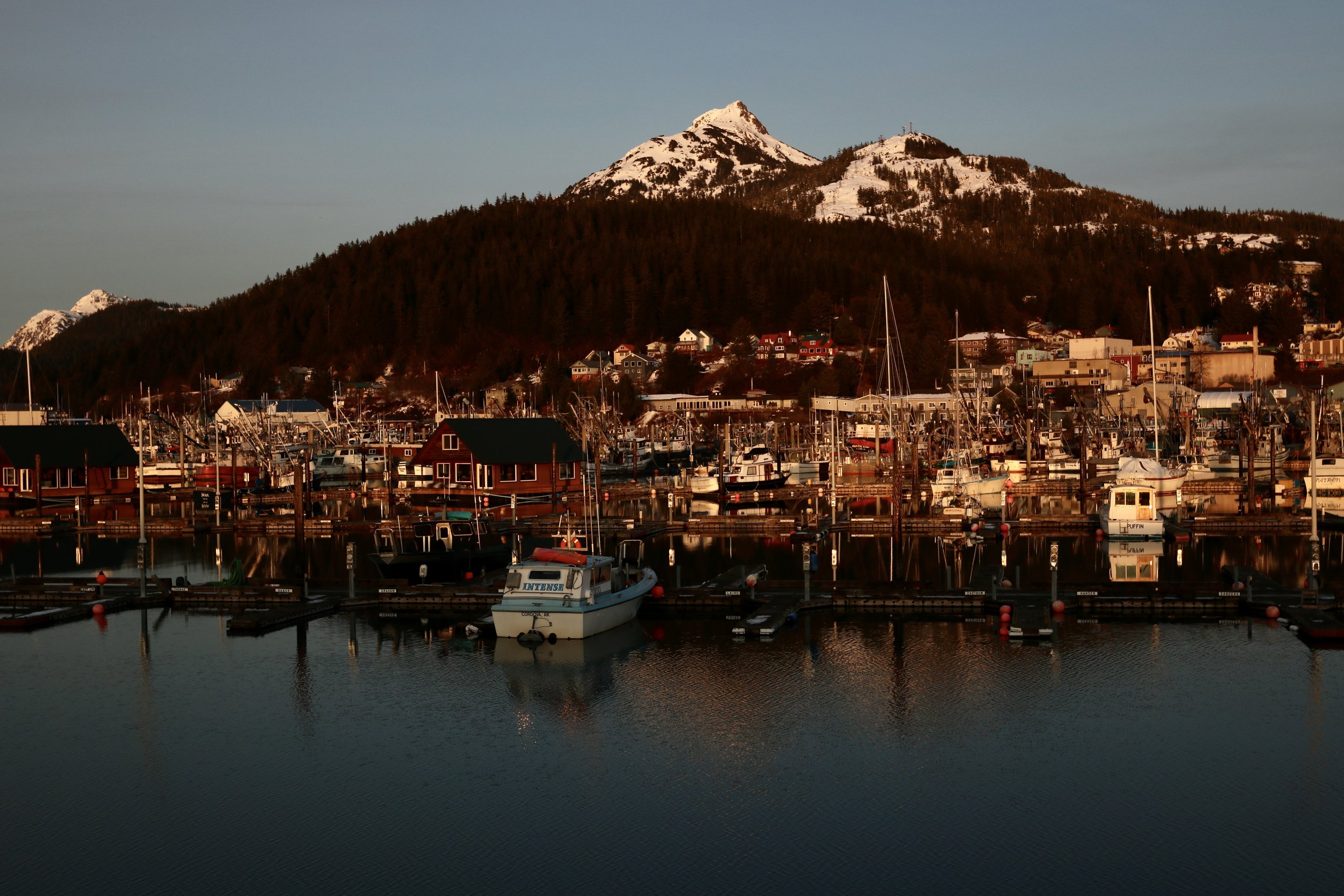
Cordova, Alaska. Commercial fishing town.
A century ago, sensing an over-fishing of their stock, Maine lobstermen began to discuss measures to protect their livelihood. Though those measures have evolved, they still serve as guide posts. Maine’s wild clam diggers also recognize the need to protect their resource from overexploitation. Ordinances, quotas, license stipulations and conservation activities like manually re-seeding the flats with young clams all serve this purpose.
A new effort of Island Institute supports the growth of fishing and aquaculture co-ops, to encourage local-level community support, management, and the pooling of resources.
These are examples of communities aiming for a “moral economy.” That is, an economy that recognizes the fundamental need for sustainably shared resources.
TODAY, MANY GLOBAL fishing stocks are following that of the Atlantic cod fish.
Out in the North Pacific, pollock management isn’t quite keeping up with the obvious signs of imminent collapse. This time around, the over-exploitation collapse is likely compounded by warming water. As that friend Greg told me, those big pollock boats are lately bleeding money into the Bering Sea water, scraping bottom for the last fish. So why are they fishing so long into the season? Why not just give up?
It’s in part a product of numerical mismanagement: Out there, if a boat does not use all its allotted quota, it will lose some of that quota in the next season. This means that boats are incentivized to fish even when it's not profitable, even when the fish populations are so obviously hurting.
This set up places the short-term “health” of big economies over the long-term life of the planet–and all of us who depend on it.
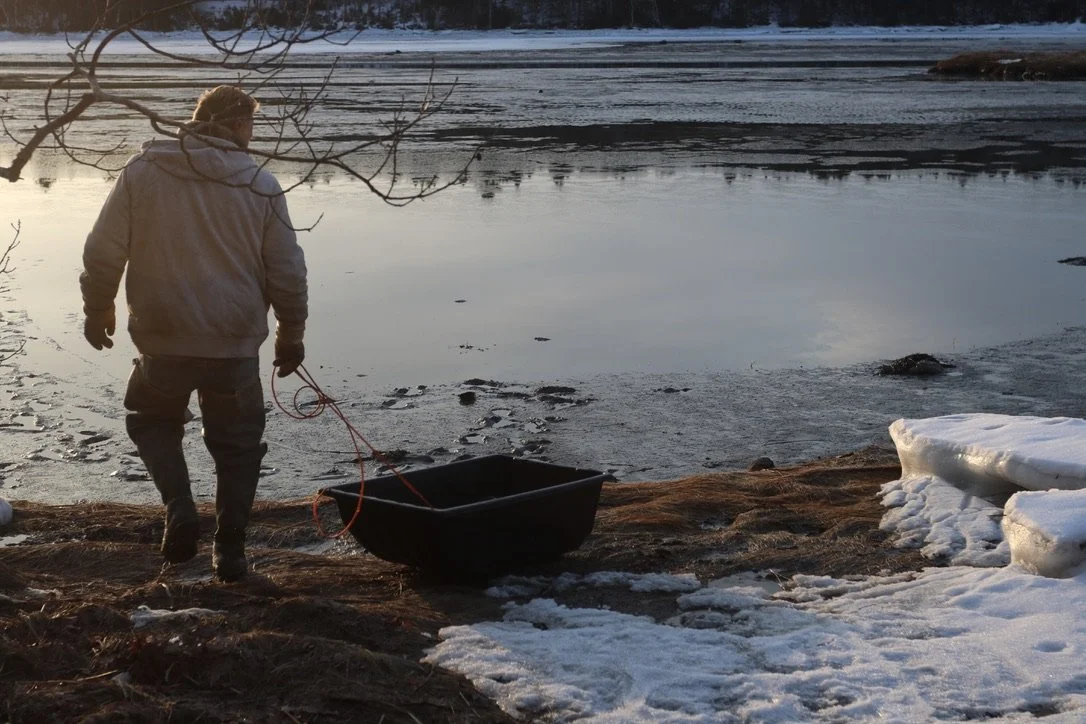
Even little Spirit Pond, in which Terry Watson grows oysters, is part of the whole, salty web. “The tides are what’s real,” Terry said to me the other day. “That’s why I like it out here.”
OKAY. ALL THIS doom and gloom brings me back to the High Seas Treaty.
That treaty sets the groundwork for something astronomically cool – the notion that the health of the ocean is a global right, and that this world is composed of one big ecosystem in which we are all active participants.
Protecting these vast, distant habitats of spawning, living, rotting, and feeding organisms means protecting smaller, more sustainable fisheries. It means setting the standard of protection for people who live and work on every coastline, those here in Phippsburg, those in Morocco, in Alaska and eastern Canada–everywhere.
Ecosystems and their management protection are, like nations, defined by imaginary lines. You can only “outsource” anything–a polluting factory, a dangerous power plant, a harmful extractive industry, or cheap, tough labor–if you decide that there’s a line between here and there. I think a lot of us living within an environment shaped by global neighbors we may never meet, corporations we can’t seem to reign in, and bad habits we just can’t seem to kick, understand that the world is getting too small to keep pretending it isn’t one, shifting place.
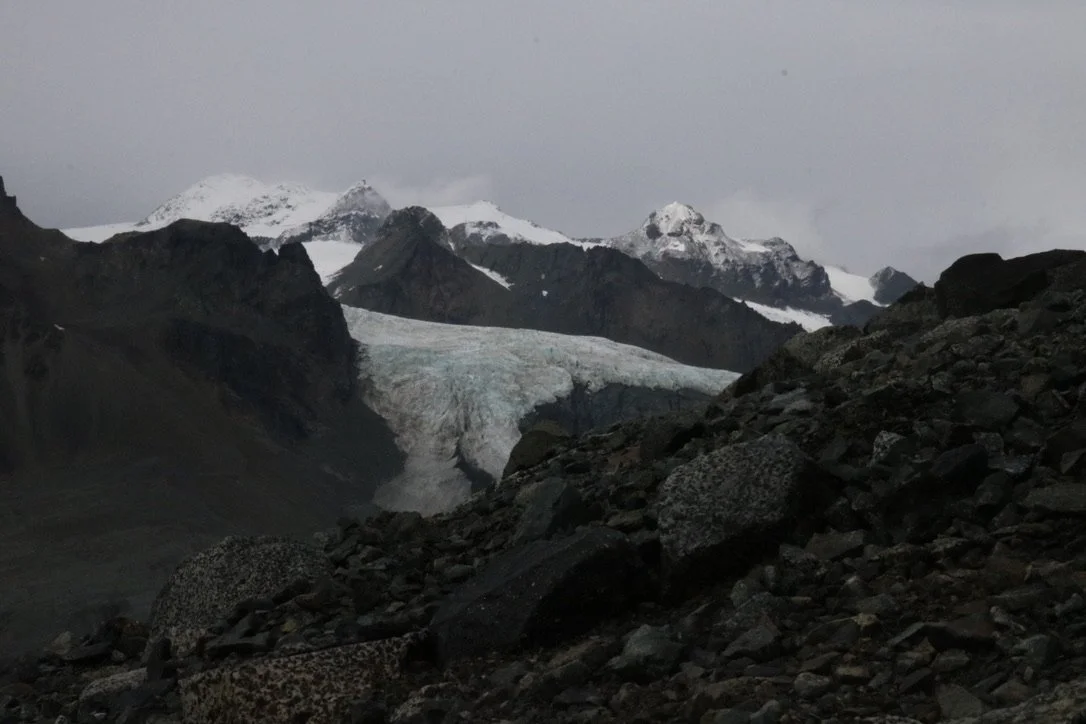
The Gulkana Glacier feeds the Gulkana River, which supports a large sockeye salmon run, which feeds people, bears, riparian plants, microbes. When I worked on the Gulkana River, we’d hike the base of the glacier, crossing the braided, proglacial river at its base. Coincidentally, the US military also trains for cold climates in this area.
THE HIGH SEAS Treaty, of course, requires enforcement. Enforcement in turn requires force. Force requires money and the attention of those in power. Right now, as amazing as the groundwork of that treaty is, the big global powers that need to help fund the protection of the global ecosystem are not so attentive to the problems of the small-scale harvest. The US has the capacity to encourage this ecological protection–perhaps with the help of the very vessels made here in Maine. Currently, however, though the US signed on to the treaty in 2023, as of this writing in February 2026, there seems to be little hope that we will actually ratify it anytime soon.
To put that in a local perspective, having the treaty without enforcement could be like setting exciting local marine laws to protect, say, the mooring rights of lobstermen from being crowded out, but having no harbormaster to enforce it.
But in my mind, this treaty has the potential to set something absolutely profound in motion. Its underlying notions are that the global ecosystem is one shared resource and that no nation, company or industry, no matter their might, has the right to overexploit that ecosystem to the detriment of anyone else. So what if this treaty, no matter how tricky it is to enforce in this moment, is setting the groundwork for a different sort of future? One whose ideals are difficult to imagine now – but not impossible.
Some weeks, like these snowier ones, it can feel like Phippsburg is isolated from the wider world. Other times, it feels totally enmeshed in, or even at the whim of global currents. Change arrives. Sometimes it's disconcerting. But for every disconcerting change, there’s often somebody doing the work to stitch together a better future.
Global advocacy is just that: global. That means just as it can support Moroccan sardine fishermen, Alaskan salmon seiners, and the Ungangan harvesters of the Aleutians, it will also support Canadian cod fishermen, Wabanaki lobstermen, and Phippsburg’s clam diggers.
That’s it for this one. Thanks for reading, all! By the way, if there’s ever a marine issue you think I should shout about, or if I’ve misquoted someone, or otherwise put my foot in my mouth, let me know.
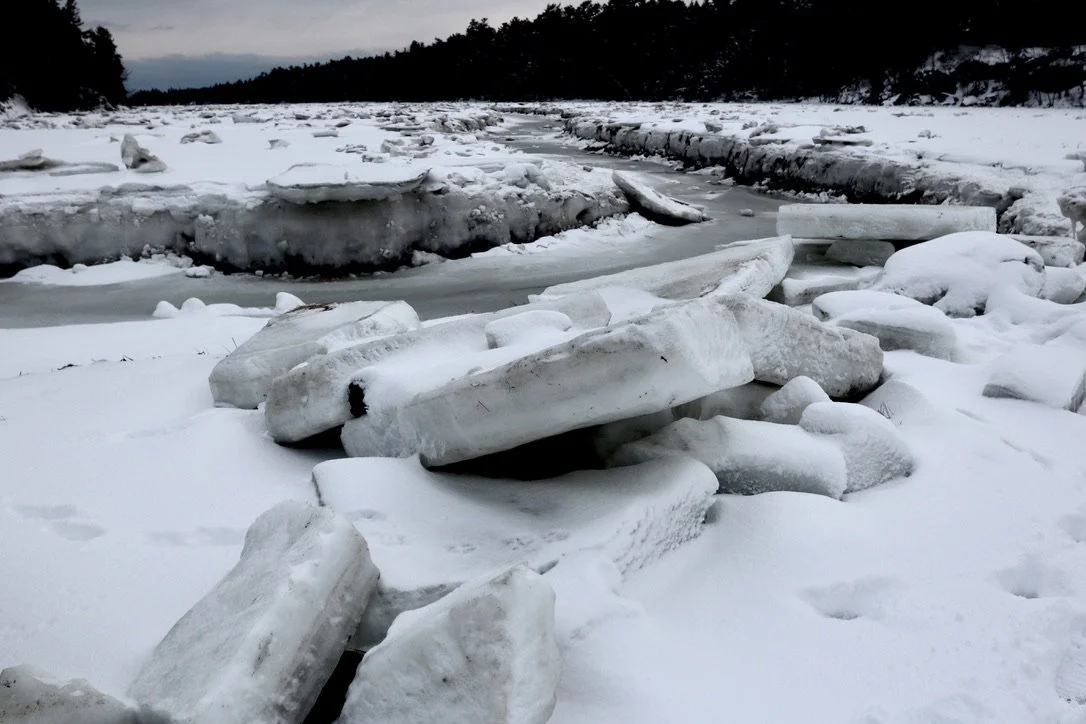
Salt marsh at Morse Mountain Preserve.
If you haven’t subscribed and would like do, you can do that here: Subscribe.